President Trump set a first-ever Republican midterm convention in Dallas to supercharge turnout and frame 2026 as a referendum on his America First record.
Story Highlights
- Trump announced a first-ever Republican midterm convention for September 9-10 in Dallas.
- The event will take place at the American Airlines Center, according to multiple outlets.
- The purpose is to boost turnout in races that decide control of Congress.
- Republicans amended party rules earlier this year to allow a midterm convention.
Trump Sets a New Kind of Convention to Energize 2026 Turnout
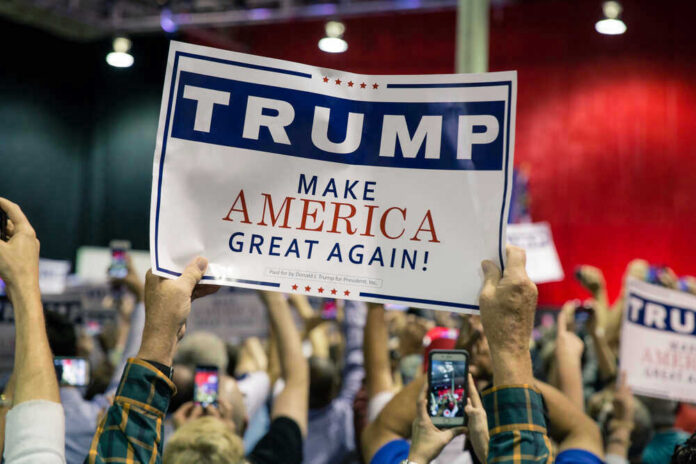
President Donald Trump announced the Republican Party will hold its first midterm convention on September 9-10 in Dallas. The goal is to rally voters weeks before Election Day. Reporters described the plan as unusual, but the mission is clear: lock in control of Congress by driving turnout in key races.
Multiple outlets reported the same dates and location within hours, underscoring the scope and seriousness of the effort. The move signals a high-energy push to defend gains and expand the House and Senate majorities.
Coverage confirms the venue as the American Airlines Center in downtown Dallas, a major arena suited for large, televised moments. The setting offers a prime stage to spotlight border security, crime, economic growth, and judicial wins under the America First agenda.
Trump cast the gathering as a celebration of a “great American comeback,” blending victory lap and get-out-the-vote launch. That approach aims to keep focus on results that matter to families: lower costs, safe streets, strong borders, and respect for constitutional rights.
Rule Change Cleared the Path for a Midterm Showcase
The Republican National Committee changed its bylaws in January to permit a midterm convention, breaking with a 170-year pattern of only quadrennial nominating gatherings. Party leaders framed this as a way to “defy history,” since incumbent parties often lose seats in midterms.
The timing follows the last primary contests but lands before early voting begins, when attention is high and momentum can shift fast. The schedule provides a national stage to unify messages and arm candidates with crisp contrasts on spending, border enforcement, and energy policy.
Trump confirms GOP will hold 'midterm convention' in Dallas in September https://t.co/H5J9GqxKeD pic.twitter.com/vLswheyYue
— New York Post (@nypost) July 1, 2026
Analysts expect the format to skip platform fights and focus on messaging discipline. That means prime-time speeches, targeted policy showcases, and state-by-state turnout drives. The structure helps candidates tie local issues to national stakes. Voters will hear why border chaos, crime, and inflation are ballot-box issues that demand a check on Washington.
The Dallas spotlight also cues donors and volunteers to surge resources into close races where a few thousand votes can decide control of committees that oversee taxes, regulations, and constitutional rights.
Media Skepticism Meets a Facts-First Rollout
Major outlets labeled the plan “unconventional” and “first-ever,” sometimes with a skeptical tone. Yet the core facts align: Trump announced the event, reporters confirmed the dates, and the venue is set in Dallas. The purpose is turnout, not nominations.
That clarity should help cut through noise and keep focus on the mission. Where details are pending—like the full speaker list, budget, and final program—planners say more will follow. The absence of a public Republican National Committee resolution document does not change the bylaw authority already in place.
President Donald Trump has announced a midterm convention for the Republican Party, set to take place in Dallas, Texas, on September 9 and 10. https://t.co/t1bo9igDDx
— NewsRadio WHAM 1180 (@WHAM1180) July 1, 2026
Democratic leaders have not rolled out a matching midterm convention strategy, at least not yet. If they do, the contrast will be helpful. One side is building a national rally to defend the Constitution, secure the border, lower energy costs, and stop overspending.
The other side will need to explain why the last decade’s inflation, crime spikes, and open-border policies deserve more time. For now, Republicans have seized the initiative with a clear, legal, and highly visible plan to drive turnout in decisive states.
Sources:
apnews.com, cbsnews.com, nytimes.com, aljazeera.com, en.wikipedia.org, keranews.org