Federal and state enforcers say Dollar General charged more at the register than its shelf tags promised, and they brought the receipts.
Story Snapshot
- Federal Trade Commission and 20 states filed a sweeping lawsuit alleging deceptive pricing.
- Undercover buys allegedly rang up higher than shelf tags in multiple states.
- Internal records reportedly logged 29,265 “Did Not Honor Marked Price” complaints since 2023.
- Dollar General says it aims for 100% accuracy and fixes errors when it finds them.
What enforcers say happened and why it matters
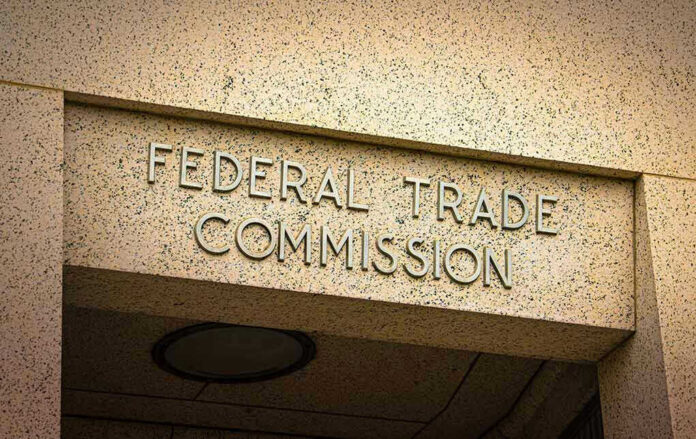
The Federal Trade Commission, joined by 20 attorneys general, sued Dollar General on October 26, 2026. The suit alleges a long-running pattern in which shoppers paid more at checkout than the prices shown on shelves, tags, and ads. The complaint says the gaps cost consumers millions of dollars and happened across many stores nationwide. This is not a clerical footnote. Register pricing is the moment of truth. When the shelf and scanner do not match, trust breaks first, then budgets.
The case details undercover purchases that allegedly scanned at higher prices than posted in Ohio, Pennsylvania, Missouri, and Maryland. Investigators reportedly saw the same kind of mismatch repeat across locations and items. That pattern matters because random noise scatters. Patterns cluster. Regulators argue the clustering shows a control failure, not a one-off slip. Dollar General runs about 21,000 stores, so small errors add up fast when multiplied by foot traffic.
The paper trail regulators will lean on.
The complaint cites Dollar General’s own complaint data. Between January 1, 2023, and March 31, 2026, customers filed at least 29,265 disputes marked “Did Not Honor Marked Price.” Those complaints came from all 48 states where the chain operated. Regulators also point to state pricing inspections and a string of earlier state settlements. Together, they aim to show notice and repetition, the two words every corporate compliance officer dreads.
Enforcers describe a simple failure path. Headquarters updates register prices by computer. Stores must swap paper shelf labels by hand. Thin staffing and high churn make weekly relabeling slip. A sale ends, or a price rises in the system, but the shelf tag lingers like an old sticker on a garage bin. When a cashier scans the item, the system wins, and the shopper loses—unless someone catches it and fixes it on the spot.
Dollar General’s response and the stakes for shoppers
Dollar General says it aims for 100% accuracy and that store teams should make things right when a price is off. The company disputes the allegations and plans to fight the case. That stance frames the gaps as occasional and correctable. The government’s case frames them as frequent and costly. Both can be true in small slices. Courts will decide which view best fits the full record and what remedy follows if laws were broken.
For shoppers, the playbook is simple and old-school. Watch the screen as items scan. Keep the receipt. If a price rings higher than the shelf, ask for a correction on the spot. Many states require stores to honor the posted price or offer set remedies. A few cents on a can of soup may sound minor. But repeated over a basket, a week, and a year, they hit families who shop for value and count quarters as carefully as dollars.
How this fits the bigger retail accuracy problem
Scanner errors are not new in retail. A longstanding Federal Trade Commission study reported that 29% of inspections failed to meet a 98% accuracy standard across more than a thousand stores, with about half the errors as overcharges. Academic work across hundreds of store visits has also found recurring discrepancies, often higher for advertised items. Those studies do not set Dollar General’s rate, but they show why weak controls can leak value fast.
The FTC and 20 states say Dollar General's shelf prices miss its register prices because stores are "frequently too thinly staffed" to print new price labels and put them on shelves. The complaint says people at the top of the company knew the stores were understaffed, citing… pic.twitter.com/KM6WYyLDyB
— Aaron Harme (@Aaron_Harme) October 26, 2026
American conservative values point to a clear bottom line. Honor the posted price, fix mistakes fast, and keep systems tight so customers do not need a debate at checkout. Low prices mean nothing if the last beep takes back the savings. Regulators are right to expect clear tags, accurate scanners, and swift refunds. Businesses earn trust by keeping promises when no one is watching—and by making it right when someone is.
Sources:
cbsnews.com, 6abc.com, ttnews.com, courthousenews.com, news.bloomberglaw.com, freep.com, main.sbcounty.gov