Drug traffickers dumped over 115 kilograms of cocaine into the Pacific Ocean while fleeing Colombian naval forces—on the same day Colombia’s president met with Trump to discuss the nation’s narcotics crisis.
Story Snapshot
- Colombian Navy recovered 116 packages containing 115.7 kilograms of cocaine worth $5.6 million from the Pacific waters
- A seizure occurred during President Petro’s White House meeting with Trump to address drug trafficking tensions
- Trump’s military campaign against drug-ferrying boats has killed over 100 people since September 2024
- Colombia has conducted multiple major cocaine busts totaling tons of narcotics in recent months
Cocaine Dumped During Naval Pursuit
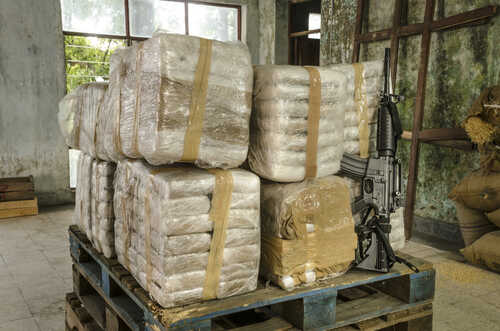
The Colombian Navy recovered 116 packages containing 115.7 kilograms of cocaine from the Pacific Ocean, approximately 55 nautical miles off Colombia’s coast. Speedboat crews jettisoned the cargo while attempting to evade naval interdiction forces.
The seized narcotics represented approximately 289,000 doses valued at $5.6 million. This tactical decision by traffickers demonstrates their willingness to destroy valuable cargo rather than risk capture and prosecution.
The operation underscores the ongoing cat-and-mouse game between enforcement agencies and sophisticated trafficking networks operating in international waters.
Boat crew tosses 115 kilos of cocaine in Pacific while fleeing navy, Colombia says
https://t.co/93CmgustjT— CBS News (@CBSNews) February 3, 2026
Boat crew tosses 115 kilos of cocaine in Pacific while fleeing navy, Colombia says
https://t.co/93CmgustjT— CBS News (@CBSNews) February 3, 2026
Diplomatic Timing Signals Enforcement Commitment
The seizure occurred on the same day Colombian President Gustavo Petro met with President Trump at the White House to discuss drug trafficking and bilateral relations. This timing provided Colombia with tangible evidence of its commitment to enforcement during a critical diplomatic moment.
Relations between Washington and Bogotá have been severely strained since October 2024, when Trump called Petro an “illegal drug leader” and Treasury Secretary Scott Bessent announced sanctions on Petro and his family.
The U.S. removed Colombia from its list of allies in the war on drugs, creating significant diplomatic and economic pressure on Bogotá to demonstrate results.
Trump’s Military Pressure Reshapes Drug War
President Trump launched a military campaign against alleged drug-ferrying boats off South America in September 2024, conducting strikes in the Pacific Ocean and Caribbean Sea that have resulted in more than 100 deaths.
This aggressive approach represents a fundamental shift from previous administrations’ enforcement strategies. The military pressure has forced trafficking organizations to adapt their routes and tactics, with increased evidence of cargo being directed toward European markets where prices are higher, and U.S. military interdiction is less prevalent.
Colombia remains the world’s largest cocaine-producing nation, facing mounting international pressure to contain surging production operations.
Series of Major Busts Demonstrates Enforcement Capability
Colombia has executed multiple significant cocaine seizures in recent months, demonstrating enhanced operational capability. In January 2026, the Colombian Navy seized approximately two tons of cocaine from a merchant vessel bound for Spain, valued at roughly $200 million in the European market.
November 2024 saw Colombia’s largest cocaine bust in a decade, with 14 tons confiscated at its main Pacific port. That same month, navy divers discovered over 450 pounds of cocaine beneath a ship preparing to sail for Europe, and forces confiscated more than seven tons from two speedboats and a narco-submarine.
Recent operations at the Buenaventura port yielded more than 200 kilograms from a ship’s sea chest, preventing the commercialization of more than 521,000 doses.
Traffickers Adapt Despite Enforcement Pressure
Drug trafficking organizations continue adapting tactics despite sustained enforcement operations, utilizing merchant vessels, semisubmersibles, and high-speed boats to maintain supply chains.
The crew’s decision to jettison cargo reflects rational cost-benefit calculations by criminal organizations facing interdiction. These adaptations suggest that while enforcement campaigns successfully disrupt individual shipments and alter trafficking patterns, production capacity continues to exceed interdiction rates.
The persistence of large trafficking volumes indicates that upstream pressure on coca cultivation and cocaine production facilities remains insufficient to fundamentally disrupt the narcotics supply reaching North American and European markets.
President Petro told CBS News he hoped dialogue with Trump would “stop a world war,” indicating serious concerns about potential military escalation in enforcement operations.
Recent diplomatic efforts have improved rhetoric between the two nations, with a Colombian official describing a February 2026 conversation between Petro and Trump as “very positive” and representing a “180° change” in both sides’ rhetoric.
These enforcement successes provide Colombia with crucial evidence to counter accusations of facilitating drug trafficking and may help reduce sanctions pressure while maintaining national sovereignty against criticism of inadequate drug war commitment.
Sources:
Boat crew tosses 115 kilos of cocaine in Pacific while fleeing navy, Colombia says – CBS News
Cocaine seized from speedboat in Pacific Ocean, Colombia video – CBS News
Colombian Navy seizes two tons of cocaine worth $200 million from merchant vessel – NewsFlare
Colombian Navy Seizes 200 Kilos of Cocaine from a Ship’s Sea Chest – Maritime Executive