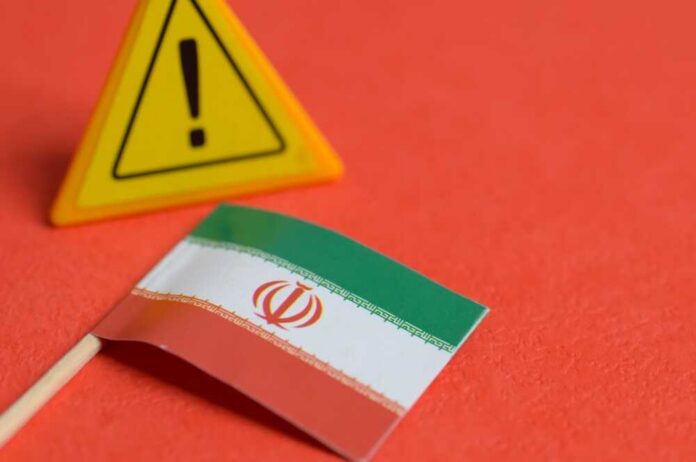
Iranian cyber threats are targeting American banks and critical infrastructure as military strikes escalate, leaving our nation’s financial sector vulnerable at the worst possible time—while the Department of Homeland Security operates with skeleton staffing.
Story Overview
- Intelligence firms warn of increased Iranian cyber reconnaissance against US banks following coordinated US-Israel strikes on Iranian targets in late February 2026
- CISA faces 38-62% staffing cuts amid shutdown, severely limiting cyber defense capabilities during heightened threat period
- Iran has a history of targeting US financial institutions with DDoS attacks, previously hitting JPMorgan and Bank of America in 2012-2013
- No confirmed attacks on US infrastructure yet, but experts anticipate disruptive operations on banks, energy, and water systems
Iranian Hackers Increase Reconnaissance Following Strikes
Intelligence firms detected stepped-up Iranian cyber reconnaissance targeting US critical infrastructure following Operation Roaring Lion and Operation Epic Fury, coordinated US-Israel strikes launched February 27-28, 2026.
These operations targeted Iranian leadership, IRGC facilities, and nuclear sites in Tehran, Isfahan, and Qom. Alexander Leslie from Recorded Future reports no confirmed US targeting yet, but observes Iran adopting a defensive posture while relying on proxy hackers.
John Hultquist of Google Threat Intelligence expects Iranian-linked actors to move beyond nuisance attacks toward disruptive operations on US, Israeli, and GCC critical infrastructure, including financial systems.
CISA Weakened by Staffing Cuts During Critical Period
The Cybersecurity and Infrastructure Security Agency operates with dramatically reduced capacity, facing 38-62% staffing cuts and furloughs during this heightened threat environment. DHS Secretary Kristi Noem coordinates threat monitoring despite these limitations, testifying before Congress on March 5.
This vulnerability exposes a dangerous gap in our national defense posture at precisely the moment when Iranian retaliation threatens American financial institutions and utilities.
The staffing crisis stems from broader DHS shutdowns and furloughs, leaving cyber defense coordination hampered. Congressional Republicans face mounting pressure to address funding gaps that leave critical infrastructure protection understaffed when Americans need it most.
US banks on high alert for cyberattacks as Iran war escalates https://t.co/gezhsqah3V https://t.co/gezhsqah3V
— Reuters (@Reuters) March 4, 2026
History Shows Iranian Capability Against US Banks
Iran’s cyber operations trace back to the post-2010 Stuxnet era, when Iranian hackers developed sophisticated capabilities targeting American financial institutions. IRGC-linked groups launched distributed denial-of-service attacks against JPMorgan, Bank of America, and other major US banks during 2012-2013, using brute-force techniques and credential-stuffing to disrupt services.
These attacks demonstrated Iran’s willingness to weaponize cyber operations against American economic targets. Jake Braun, former White House cybersecurity official now at University of Chicago, warns Americans should anticipate repeat attacks or worse on banks, oil infrastructure, water systems, and election systems, emphasizing the need to demonstrate impunity carries costs.
Christopher Burgess, former CIA officer, advises all US multinationals face elevated risk and should plan contingencies for two-week outages affecting both foreign operations and domestic systems. Flashpoint analysts identify worldwide economic infrastructure as the primary target, though many pro-Iranian hacktivist claims remain dubious and unverified.
The financial sector received specific warnings to maintain vigilance for DDoS attacks and potential escalation, though pro-Iran groups have only claimed low-level operations thus far, with no confirmed hits on US government or private infrastructure through early March.
Internet Blackouts Limit Visibility Into Iranian Capabilities
Massive cyberattacks on Iran caused widespread internet blackouts, energy disruptions, and aviation system failures, limiting intelligence visibility into Iranian cyber operations and retaliation capabilities. Recorded Future observes unusual silence from IRGC-linked hacking groups, attributing muted retaliation to these blackouts, strike damage, and leadership losses, including the reported death of Ayatollah Khamenei.
Hackers struck Iranian banking apps and cryptocurrency exchanges on March 2-4, suspected to be US or Israeli operations. This cyber fog-of-war complicates threat assessment for American defenders, making it difficult to gauge when or how Iran might strike back against US targets, including our banking system.
🚨US Banks on High Alert for Cyberattacks as Iran War Escalates
U.S. banks are on heightened alert for potential cyberattacks as the war with Iran escalates.
Following the killing of Iran’s Supreme Leader Ali Khamenei, tensions in the Middle East have intensified, raising…
— War.Sphere (@WarSphere_Media) March 4, 2026
Limited data remains available regarding specific bank preparations, though sector-wide alerts have been issued. Chicago police and other municipal agencies warned communities near military bases and places of worship to maintain heightened awareness.
The situation tests whether our cyber defenses can withstand nation-state threats while operating with reduced federal capacity—a vulnerability that should concern every American who relies on secure banking and stable critical infrastructure during this escalating conflict.
Sources:
Intelligence firms watch uptick in Iran cyber activity after US-Israel strikes – Nextgov
Cybersecurity experts warn potential cyberattacks amid war with Iran – CBS News Chicago
Middle East Escalation: Israel-Iran-US Cyber War 2026 – CloudSEK
Hackers and internet outages hit Iran amid U.S. air strikes – TechCrunch