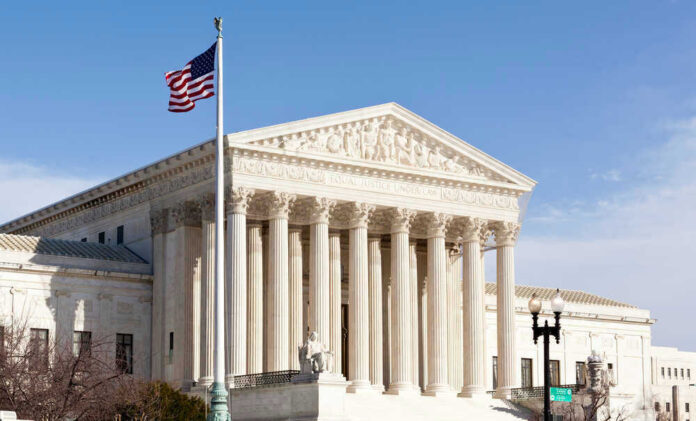
Supreme Court justices have temporarily blocked President Trump’s effort to remove Federal Reserve Governor Lisa Cook, igniting fierce debate over the limits of presidential power and the future of central bank independence.
Story Snapshot
- The Supreme Court allows Lisa Cook to stay on the Federal Reserve Board through 2026, rejecting Trump’s immediate removal request.
- Trump’s push to reshape the Fed signals a direct challenge to the institution’s traditional autonomy from the White House.
- The Court’s upcoming January 2026 arguments could redefine executive authority over independent federal agencies.
- Experts warn that undermining Fed independence could threaten economic stability and conservative fiscal principles.
Supreme Court’s Unprecedented Pause on Presidential Authority
The Supreme Court issued a rare order permitting Lisa Cook to maintain her position as Federal Reserve Governor until at least January 2026.
This decision came after President Trump sought her immediate removal, aiming to accelerate his agenda for reforming the central bank.
The Court’s move marks a significant departure from its earlier deference to presidential removal powers, especially when compared with previous rulings at agencies like the FTC and NLRB. No dissent was recorded in this order, underscoring the gravity of the constitutional questions at stake.
The legal dispute focuses on the fundamental tension between the executive branch’s authority and the independence of the Federal Reserve. The Fed was intentionally structured by Congress to be insulated from short-term political interests and to safeguard sound monetary policy.
Traditionally, presidents have faced strict limits on their ability to remove Fed governors before their term ends, a protection designed to prevent reckless monetary interference and protect American prosperity from the whims of partisan politics.
Trump’s Drive to Reshape the Federal Reserve
Following the August resignation of Governor Adriana Kugler, President Trump began a concerted effort to reshape the Federal Reserve, appointing Stephen Miran—a strong advocate for lower interest rates—and then moving to oust Lisa Cook.
Trump’s actions reflect a determination to break through what many conservatives view as an unaccountable bureaucracy that has historically resisted much-needed economic reforms.
The administration’s push is driven by longstanding frustration over the Fed’s refusal to lower rates, which Trump and his supporters argue has hurt American growth and burdened families with high borrowing costs.
Trump’s removal effort coincides with broader conservative concerns about agency overreach and the erosion of constitutional checks and balances.
By seeking to replace Cook with a loyalist, Trump aims not just to influence monetary policy but also to reassert the executive branch’s rightful authority over powerful independent bodies.
The Supreme Court’s decision to pause the removal, however, signals a rare and potentially far-reaching check on the president’s power—one that could set precedent for years to come.
Implications for Fed Independence and Conservative Values
Allowing Lisa Cook to remain on the board ensures that, for now, the Fed’s decisions are shielded from immediate political pressure.
While some argue that central bank independence is critical for long-term economic stability, many conservatives contend that the Fed’s insulation has led to years of unchecked spending, inflation, and unaccountable policy-making.
The outcome of the Supreme Court’s January 2026 arguments will determine whether presidents can finally rein in independent agencies that have often operated without direct accountability to the American people.
Former Treasury Secretaries, Fed officials, and economists have weighed in, warning that political interference could undermine the global trust that underpins the U.S. dollar and the broader economy.
Yet conservative legal scholars emphasize that unchecked bureaucratic power poses its own dangers, threatening both economic freedom and the constitutional order.
The stakes are high: financial markets, federal agency officials, and everyday Americans all stand to be affected by the precedent set in this landmark case.
What’s Next for Presidential Power and the U.S. Economy?
The Supreme Court will hear oral arguments in January 2026, with a decision expected to have sweeping consequences for the future of executive authority and the independence of the Federal Reserve.
If the Court sides with Trump, future presidents may have a freer hand to overhaul agencies that have long resisted reform. If Cook prevails, the Fed’s autonomy will be reaffirmed, potentially emboldening other agencies to resist presidential directives.
Either way, this case will shape the balance of power in Washington and the direction of American economic policy for years to come.
Sources:
Supreme Court lets Lisa Cook remain as a Federal Reserve governor for now
SCOTUS allows Lisa Cook to stay on Fed into 2026, accepts case for January argument
Supreme Court accepts case on Trump removal of Fed Governor Lisa Cook
Supreme Court says Federal Reserve Governor Lisa Cook can stay for now