Helium just jumped from party favor to national priority, with Washington treating it like a strategic lifeline.
At a Glance
- The Department of Energy designated helium a critical material on October 23, 2026.
- The move unlocks new federal financing to stabilize supply and support industry.
- Helium’s non‑substitutable role spans chipmaking, medicine, and research.
- Past reliance on a federal reserve, now sold off, raised today’s risk.
What Washington Did And Why It Matters Now
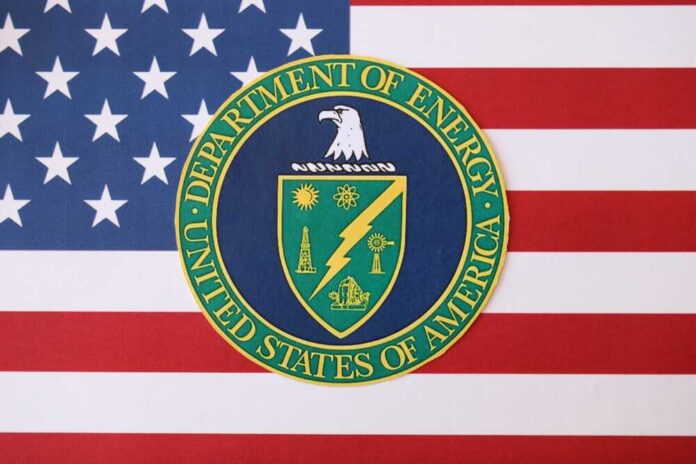
The Department of Energy named helium a critical material to shore up a fragile supply chain and protect key industries. The designation followed days after a national television report spotlighted global strain linked to conflict and bottlenecks. The label matters because it clears paths to federal tools and financing. That can speed domestic projects, spur recycling, and backstop buyers. The policy signals that shortages and price spikes will no longer dictate lab schedules, hospital uptime, or chip production lines.
Federal officials grounded the decision in two facts. First, helium is essential in uses with no easy substitute, such as cooling superconducting magnets and stabilizing chip fabrication. Second, helium supply is unusually exposed to shocks because producers recover it as a byproduct of natural gas, not as a stand‑alone mined resource. When gas projects pause or shift, helium output swings. That mismatch between critical demand and secondary supply has burned buyers before—and recently.
The Jobs And Machines That Run On Helium
Semiconductor plants need steady streams of ultra‑pure helium to keep tools clean and stable. Hospitals rely on it to cool magnetic resonance imaging magnets. Research labs use it to reach near‑absolute‑zero temperatures for high‑field science. The National Academies warned that repeated supply hits have already disrupted critical experiments and damaged equipment when boil‑off could not be replaced in time. These are not balloons. These are the backbone systems for medicine, defense tech, and the digital economy’s chips.
The Department of Energy’s critical label aims to keep these systems running by cutting red tape and widening access to financing. That can help expand processing, storage, and recycling. It can also encourage long‑term contracts that reward reliability over quick flips. From a conservative lens, that looks like prudent risk management: define the choke point, align incentives, and let private operators build with a clearer line of sight.
How We Got Here: A Century Of On‑Again, Off‑Again Strategy
Helium’s strategic tag is not new. The federal government began treating it as special in the early twentieth century. Washington then built a reserve in Texas and, at one point, handled a large share of the world’s supply through the Bureau of Land Management system. That stockpile buffered shocks for decades. Congress later ordered its drawdown and sale. By 2024, the reserve was effectively out of the game, leaving hospitals, labs, and chipmakers more exposed to global swings.
Government auditors have warned for years about this exposure. Reports traced the industry’s reliance on byproduct recovery and the storage and transport costs that few private players want to shoulder alone. The pattern kept repeating: a plant outage here, a geopolitical flare there, and then delayed scans, idled tools, and lost research time. This history frames today’s action as course correction, not novelty.
What Changes Next: From Label To Steel In The Ground
The critical designation does not print helium. It puts policy muscle behind supply security. Expect support for domestic extraction tied to natural gas fields, more processing capacity, and regional storage that can ride out outages. Expect incentives for recycling at hospitals, chip fabs, and labs to cut waste. Expect stronger data on inventories and flows so buyers can plan. If agencies execute cleanly, the result is fewer panic buys and steadier prices for essential users.
🇺🇸 #Helium is now officially a U.S. Critical Material
As announced last week, the U.S. Department of Energy has added helium to its Critical Materials List – recognising its essential role in semiconductor manufacturing, advanced technologies and secure domestic supply chains… pic.twitter.com/yPWS024DLb
— Quantum Helium (LSE:QHE) (@quantum_helium) October 26, 2026
Private industry will still do the heavy lifting. The government’s job is to clear bottlenecks, enforce fair dealing, and back critical infrastructure that markets underprovide. That fits common sense and conservative values: protect strategic functions, avoid mission creep, and demand outcomes. One caution deserves mention. Labels without follow‑through do not cool an MRI or etch a wafer. Success will be measured in quieter news cycles and machines that never lose their chill.
Sources:
cbsnews.com, energy.gov, nationalacademies.org, gao.gov, newsweek.com, naturalresources.house.gov