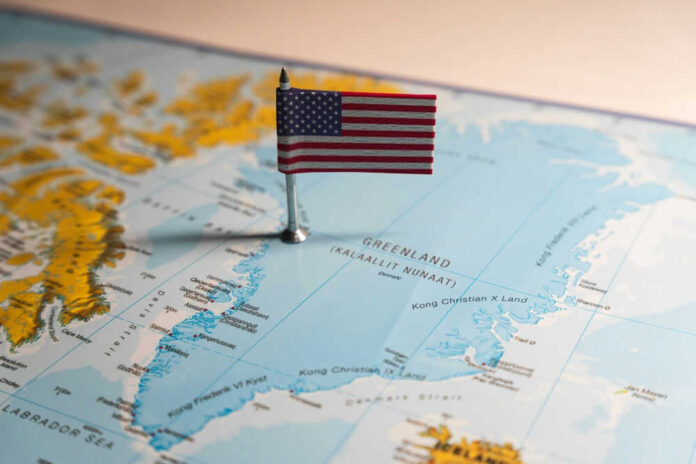
President Trump’s landmark Greenland deal framework with NATO defuses tariff tensions but leaves many questions unanswered.
Story Highlights
- Trump negotiated a Greenland deal framework with NATO, defusing tariff threats.
- The framework lacks specific details, raising questions about U.S. ownership goals.
- NATO allies maintain skepticism about Trump’s intentions and future demands.
- The agreement reflects a shift from unilateral threats to diplomatic negotiations.
Trump’s Greenland Deal Framework: A Strategic Shift
President Donald Trump announced on January 21, 2026, that he has reached a “framework of a future deal” with NATO Secretary-General Mark Rutte concerning Greenland and the Arctic Region.
This announcement marks a significant strategic shift from Trump’s previous threats of imposing tariffs on eight European nations. The tariffs, slated to begin on February 1, 2026, have now been reversed, highlighting Trump’s preference for negotiation over unilateral action.
Trump’s decision to engage directly with NATO leadership rather than pursuing military action reflects a willingness to embrace diplomatic channels. However, the framework remains undefined, with Trump offering no specific details about what the agreement entails.
This vagueness leaves room for speculation about whether U.S. ownership of Greenland remains a goal, despite his assurances of a “very good deal” for all involved parties.
Trump says he reached Greenland deal 'framework' with NATO, backs off Europe tariffs https://t.co/9MNy56lehX
— CNBC (@CNBC) January 21, 2026
European Allies’ Skepticism and Response
European allies, notably Denmark, have expressed strong resistance to any sale of Greenland, viewing Arctic security as a collective NATO responsibility. The framework agreement temporarily eases immediate tensions by reversing tariff threats, but skepticism persists.
European leaders, including UK Prime Minister Keir Starmer and EU Commission President Ursula von der Leyen, have voiced their readiness to respond to any future unilateral U.S. actions, emphasizing their commitment to maintain Greenland’s current status.
The situation underscores the complex dynamics within NATO, where Trump’s economic leverage through tariff threats contrasts with the diplomatic strength of European allies. NATO Secretary-General Rutte’s role as a mediator highlights the delicate balance required to manage U.S. demands while maintaining alliance cohesion.
Implications for U.S. Arctic Strategy
The framework agreement hints at potential changes in U.S.-NATO coordination on Arctic security and resource management. While the agreement does not appear to alter Greenland’s sovereignty under Denmark, it may lead to an expanded U.S. military presence in the region. This development aligns with Trump’s longstanding interest in Greenland’s strategic significance due to its Arctic location and resources.
BREAKING: Trump says he reached Greenland deal ‘framework’ with NATO, backs off Europe tariffs.
— LifeSiteNews (@LifeSite) January 21, 2026
As negotiations continue, led by Vice President JD Vance, Secretary of State Marco Rubio, and Special Envoy Steve Witkoff, the outcome will significantly impact U.S.-NATO relations. The framework serves as a diplomatic pause rather than a final resolution, with ongoing discussions expected to shape the future of Arctic security and the U.S.’s role within NATO structures.
Sources:
ABC News: Trump Stands Down on NATO Tariff Threat, Citing ‘Framework’ for Greenland Deal
Politico: Trump Backs Off Europe Tariffs After Reaching Greenland Deal Framework