A giant rocket ship fell out of the sky, flipped itself upright, and got caught by two metal arms like a baseball mitt the size of a skyscraper.
Story Snapshot
- SpaceX caught the Starship upper stage, Ship 42, at its Starbase tower on November 14, 2026, after more than 22 hours in orbit.
- The vehicle circled Earth 14 times, deployed Starlink satellites, then re-entered over Mexico before the catch at Pad 2.
- This marked the first time SpaceX caught the upper stage; the Super Heavy booster, Booster 22, aborted its own landing and diverted into the Gulf instead.
- The mission was originally pitched as a “double catch” attempt, but only one of the two stages actually came home to the tower.
The Catch That Changes The Rocket Business
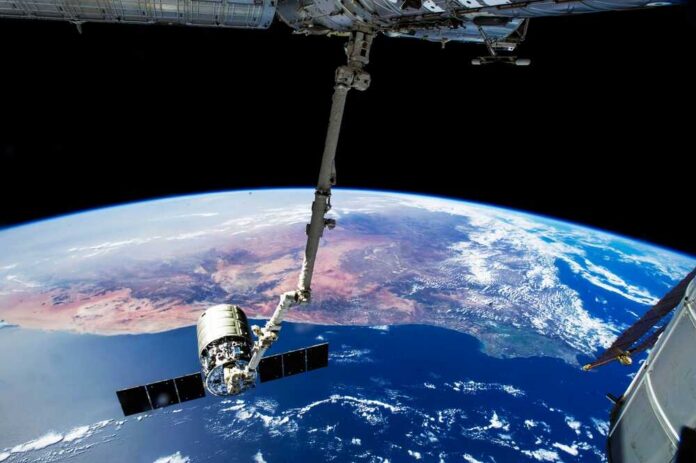
Ship 42 spent more than 22 hours circling the planet, completing roughly 14 orbits at about 171 miles up, before coming home. USA Today reported the spacecraft re-entered over Mexico, crossed the Gulf, flipped itself into landing position, and fired its engines for the final approach. Mechazilla’s tower arms then caught it over Starbase, Texas, closing the loop on a flight that began as a routine satellite delivery run.
NASA Spaceflight pinned the exact numbers: about 22.5 hours aloft and 14 trips around Earth before the ship returned over land to the launch site. That detail matters. Earlier Starship test flights that attempted recovery ditched the upper stage in the ocean, treating it as a one-use vehicle. Catching it at the tower instead means SpaceX can, in theory, skip the salvage-and-rebuild process entirely.
Why This Was Supposed To Be A Double, Not A Single
Flight 15 was marketed ahead of time as SpaceX’s first attempt to catch both the booster and the ship on the same mission. Space.com and CNET both described the plan clearly: grab Super Heavy first, then grab Ship after its orbital lap, with the tower arms doing double duty in one afternoon. That framing built real excitement, and it set a bar the mission did not fully clear.
Booster 22 never got the chance to prove itself. NASA Spaceflight reported the booster aborted its return shortly after launch and diverted into the Gulf instead of attempting the tower catch. Space.com confirmed SpaceX skipped the first-stage landing attempt altogether. One half of the “double catch” did not happen, even as the other half made history.
One Success, One Setback, One Clear Milestone
Calling Flight 15 a clean double catch would overstate what actually happened. The honest scorecard is a successful upper-stage catch paired with a booster that aborted and diverted to open water. That split outcome does not erase the achievement. Catching a 150-foot spacecraft returning from orbit, on the first attempt, is still a real engineering win worth celebrating on its own terms.
Common sense says milestones should be reported as what they are, not inflated into something bigger for a headline. SpaceX built its reputation on blunt public failures followed by fixes, not spin. Giving credit for the actual win here, the ship catch, while being straight about the booster abort, respects both the achievement and the audience’s intelligence.
What A Full Reusable System Still Requires
Industry analysts have long argued that a reusable rocket only pays off if both stages come back fast and in flyable shape, not just one. Bloomberg’s reporting on Starship’s economics notes the whole model depends on both the booster and the upper stage landing undamaged so they can fly again quickly. A single successful catch is a proof of concept, not yet proof of a repeatable system.
That is the real headline buried under the celebration. SpaceX cleared a technical hurdle nobody had cleared before. But the booster abort is a reminder that rapid, reliable reuse of an entire rocket stack, the thing that would actually make Mars-class ambitions affordable, still has unfinished work ahead. The ship catch earns its applause. The booster still owes SpaceX an answer.
SpaceX caught a Starship upper stage coming back from orbit for the first time on Saturday, 22.5 hours after launch. The booster's catch failed after its fuel ran low, and Musk says a better Raptor engine and a software change will fix it. Catching the ship is the key step toward…
— Scott T Archer (@ScottTArcher) November 16, 2026
Markets responded fast regardless of the split result, with analysts at firms including UBS and Citi reportedly raising price targets on SpaceX following the catch. That reaction tells its own story: investors are betting the upper-stage breakthrough alone is significant enough to justify confidence, even with the booster question still open.
Sources:
cnbc.com, tfr.faa.gov, astronomy.com, cnet.com