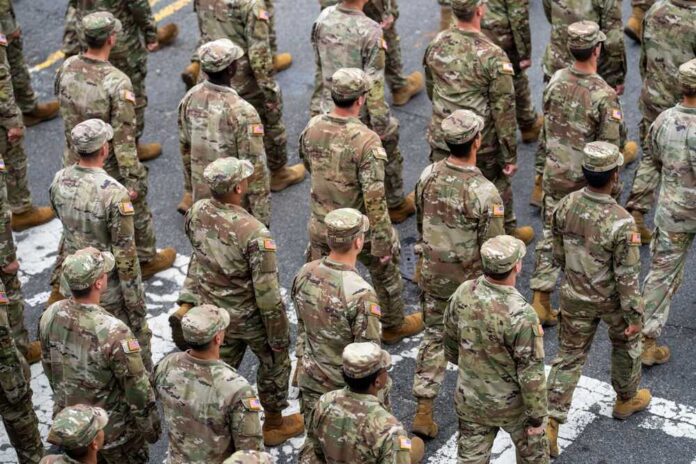
President Trump’s bold federalization of National Guard troops to combat crime and illegal immigration in sanctuary cities met fierce judicial resistance, forcing a strategic withdrawal that safeguards constitutional federalism while vowing a stronger return.
Story Snapshot
- Trump deployed thousands of federalized National Guard troops to Chicago, Los Angeles, and Portland to enforce immigration laws and curb urban crime waves fueled by open borders.
- Activist courts, including the Supreme Court, blocked these deployments, overriding presidential authority and protecting Democratic sanctuary policies at taxpayer expense.
- Nearly $500 million was wasted on operations that restored order but were undercut by judicial overreach and blue-state obstructionism.
- Troops fully withdrawn by January 21, 2026, after Trump’s December 31 announcement promising a fiercer comeback when crime surges again.
- Deployments exposed dangers to Guard members, with two shot near the White House, underscoring risks of domestic missions against leftist chaos.
Deployment Origins and Legal Battles
President Trump activated California National Guard units under Title 10 authority, sending approximately 4,000 troops and 700 Marines to Los Angeles amid violent protests following immigration enforcement raids.
Democrat governors like California’s Gavin Newsom and Illinois’ J.B. Pritzker objected, filing lawsuits that were supported by state attorneys general.
A Trump-appointed federal judge in Oregon blocked the deployment in Portland in October 2025, while the Ninth Circuit had hinted at approval before higher courts intervened.
This federalization asserted presidential control over state assets to restore law and order in crime-ridden Democrat strongholds, countering sanctuary city policies that harbor illegal immigrants and exacerbate violence.
Court Rulings Force Withdrawal
The Supreme Court rejected Trump’s deployment demands in December 2025, prompting the administration to drop Ninth Circuit appeals for Los Angeles access.
Federal Judge Breyer ordered the California Guard out of Los Angeles by December 15, upheld by the Ninth Circuit on December 12. Trump announced withdrawal from Chicago, Los Angeles, and Portland on December 31, 2025, stating troops would return “in a much different and stronger form when crime begins to soar again—only a question of time.”
Demobilization completed by January 21, 2026, with over 5,000 troops from Los Angeles, 500 from Chicago, and 200 from Portland returning home. These rulings reinforced Posse Comitatus limits, constraining military aid to civilian law enforcement despite rising threats from unchecked migration.
Trump quietly withdraws National Guard troops in retreat from blue cities after court losses https://t.co/B8ql9v65vZ
— Daily Mail (@DailyMail) February 11, 2026
Impacts on Troops, Taxpayers, and National Security
Deployments cost nearly half a billion dollars per Congressional Budget Office estimates, funding operations in at least 10 cities despite local violent crime declines misrepresented by administration critics.
Two West Virginia National Guard members were shot near the White House in November 2025—one killed, one critically injured—highlighting the perils of domestic duty amid political violence.
Troops remain in Washington, D.C. (over 2,500, ending later in 2026), Memphis, and New Orleans under agreements with Republican governors. This episode underscores how judicial activism and Democratic resistance squander resources needed for border security, leaving sanctuary cities vulnerable to the very chaos Trump sought to quell through decisive federal action.
Strategic Victory Amid Setbacks
Courts upheld governors’ authority over state Guard units, curbing what judges called an attempt at a “national police force.” Yet Trump’s initiative exposed sanctuary city failures, where declining crime stats mask deeper issues from illegal immigration and fiscal mismanagement under prior leftist regimes.
Ongoing raids continue targeting unlawful entrants, aligning with promises to deport criminals and restore sovereignty. This withdrawal represents tactical repositioning, not defeat—conservatives celebrate the Guard’s role in pushing back against open-border policies that inflate costs and erode family values through urban decay. Future strategies will bypass obstructive courts to protect American communities effectively.
Sources:
Capitol B News: City-by-city breakdown with crime data analysis
Politico: Comprehensive coverage of Trump’s announcement and legal context
The Independent: Detailed analysis of the withdrawal and court rulings
LAist: Local Los Angeles perspective on deployments
Wikipedia: Chronological documentation of deployments and court decisions
KVIA: Trump announcement coverage