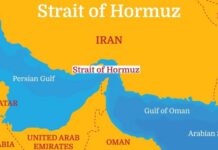
President Trump delivers a stark ultimatum to Iran, threatening to obliterate its vital Kharg Island oil hub unless the Strait of Hormuz reopens immediately, showcasing America’s resolve to secure global energy flows.
Story Snapshot
- Trump warns of destroying Iran’s Kharg Island oil export hub, oil wells, power plants, and desalination facilities if no deal is reached soon.
- US forces maintain a strategic “stay” in Iran, holding back strikes to pressure Tehran into compliance.
- Negotiations show progress with Iran allowing 10 then 20 oil tankers through Hormuz as goodwill gestures.
- Iran acknowledges a 15-point US proposal but denies direct talks, amid claims of a “more reasonable regime” in Tehran.
- Kharg Island handles 90% of Iran’s crude exports, making it a prime target to cripple the regime’s economic lifeline.
Trump’s Ultimatum on Truth Social
On March 30, 2026, President Donald Trump posted on Truth Social a direct threat to destroy Iran’s Kharg Island oil export hub unless Iran agrees to immediately reopen the Strait of Hormuz. Trump specified targeting oil wells, electric generating plants, and possibly desalination plants.
He tied this to ongoing serious discussions with a more reasonable regime in Tehran, claiming great progress. This ultimatum serves as the potential end to the US military stay in Iran. The statement blends negotiation optimism with firm resolve to protect vital sea lanes carrying 20-30% of global oil trade.
REAKING: U.S. President Donald Trump has said the U.S. will “completely” obliterate Iran’s electric generating plants, oil wells and Kharg Island if the Strait of Hormuz is not “immediately” reopened and a peace deal is not reached “shortly.”
🔗Read more: https://t.co/dG1nfLGuK7 pic.twitter.com/azOpIijt5Q
— CNBC International (@CNBCi) March 30, 2026
Negotiation Timeline and Progress
Trump’s threat follows recent developments. On March 24, he noted Iran provided an unspecified expensive energy-related concession. By March 26, Iran permitted 10 oil tankers to transit the Strait of Hormuz as a goodwill gesture during negotiations.
That same day, Trump told reporters talks were doing extremely well, with 20 more tankers set to pass starting the next morning as a sign of respect. These steps signal de-escalation attempts amid US pressure. Iran’s Foreign Ministry spokesperson Esmail Baghaei confirmed receiving a 15-point US proposal but denied direct negotiations.
Strategic Importance of Kharg Island
Kharg Island, located 24 kilometers off Iran’s coast, serves as the primary oil export terminal handling 90% of Iran’s crude, mainly to China and Asian markets. Disrupting it would devastate Iran’s economy, already strained by sanctions and conflict.
Trump referenced US forces purposefully withholding strikes on this infrastructure and related sites. This differentiates from past rhetoric, explicitly linking the threat to the current US presence in Iran and Hormuz access. Such precision underscores leverage in deal-making to end the war and secure energy stability.
The island’s vulnerability amplifies the message: comply or face economic collapse. This approach aligns with conservative priorities of energy security and strong national defense against regimes that threaten global trade.
Stakeholders and Power Dynamics
President Trump leads as the ultimate US decision-maker, motivated by swift war resolution, energy dominance, and political victory. US military executes the stay, dictating terms through presence and restraint.
Iran’s leadership, possibly divided per Trump’s “reasonable regime” reference, balances nuclear leverage against oil export preservation. China watches closely as a major buyer. No direct talks suggest indirect channels, with tanker concessions showing Iran’s Hormuz leverage weakening under pressure.
These dynamics position America favorably, rejecting endless conflicts while enforcing red lines on adversaries.
Potential Impacts and Broader Context
Short-term, a deal lifts the Hormuz blockade, stabilizing oil flows and averting price spikes. Failure invites strikes halting 90% of Iranian exports, risking global energy shocks like 1979. Long-term, crippled infrastructure could topple the regime, reshape alliances, and bolster US credibility.
Global consumers, Persian Gulf shipping, and Asian importers face disruptions. Tensions root in 1979 Revolution, Tanker War, JCPOA exit, and recent proxies, with US intervention enabling this stance. Limited post-March 30 data highlights an evolving situation.
Sources:
Trump threatens to obliterate Iran’s Kharg Island oil hub if no deal reached shortly