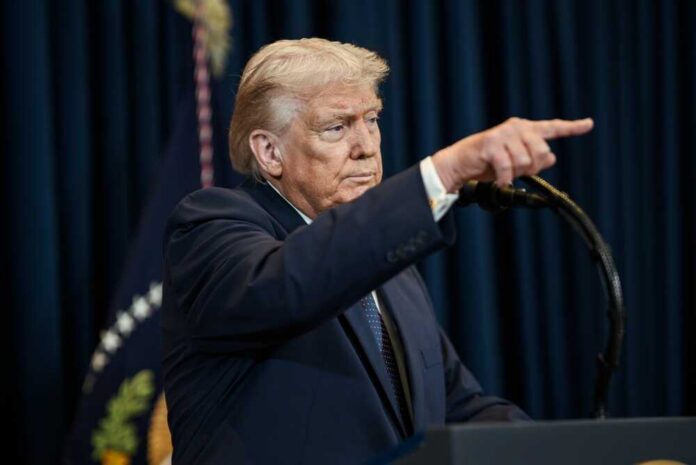
President Trump signs an executive order fast-tracking Schedule I hallucinogen ibogaine for desperate veterans, despite documented deaths and heart risks, raising alarms over safety versus innovation.
Story Snapshot
- Trump’s April 18, 2026, order allocates $50 million to match state funds for psychedelic research, spotlighting ibogaine for PTSD and addiction in veterans.
- Directs FDA and DEA to open Right to Try access to ibogaine, even though it lacks Phase I trials and carries severe cardiotoxicity risks.
- A Stanford study shows promise for magnesium protection, but critics warn of 27 deaths and of politics trumping science.
- Texas’s 2025 research push prompted a federal response, signaling a shift from deep state drug war rigidities.
Executive Order Details
President Donald J. Trump signed the executive order on April 18, 2026, directing federal agencies to expedite psychedelic research and FDA reviews. The directive targets treatments for serious mental illnesses like PTSD, depression, addiction, and traumatic brain injuries, prioritizing veterans.
It allocates $50 million through ARPA-H to match state investments, responding directly to Texas’s 2025 ibogaine research consortium. Ibogaine receives explicit mention twice, underscoring its prominence despite Schedule I status.
Ibogaine’s Promise and Perils
Ibogaine, derived from the African Tabernanthe iboga shrub, shows potential in reducing PTSD symptoms, anxiety, depression, and addiction cravings, per a July 2025 Stanford Medicine study on veterans using magnesium for heart protection.
A 2023 review of 24 studies with 705 participants confirmed benefits for withdrawal but highlighted “worrying” cardiac toxicity, including QT interval prolongation that risks arrhythmia or heart attack. At least 27 deaths link to ibogaine use, forcing U.S. patients to risky overseas clinics.
Regulatory Hurdles and Criticisms
The order mandates FDA and DEA to create Right to Try pathways for ibogaine, though Harvard legal experts deem this problematic since the drug skips Phase I safety trials. NIDA Director Nora Volkow flagged cardiac risks as approval barriers in 2024.
Medical professionals like Dr. Kopelman stress mitigation via monitoring but accuse the push of prioritizing hype over science. Implementation details remain unclear, with White House strategies still evolving.
Trump signs order to speed review of psychedelics, including the controversial drug ibogainehttps://t.co/1ndcZ6JYjv pic.twitter.com/QRget6qwpP
— 1010 WINS on 92.3 FM (@1010WINS) April 18, 2026
FDA breakthrough designations for some psychedelics built momentum, yet ibogaine’s Schedule I classification—alongside heroin—blocks domestic trials.
Trump’s action challenges decades of federal overreach, echoing frustrations across political lines with elite-driven policies that neglect everyday Americans, including suffering veterans abandoned by big government bureaucracy.
Impacts on Veterans and Broader Policy
Veterans stand as primary beneficiaries, potentially gaining domestic options over dangerous international trips. Short-term, funding boosts trials; long-term, success could reclassify ibogaine, filling opioid addiction treatment gaps. Yet cardiac patients face amplified risks.
Politically, the move appeals bipartisanly via veteran support, positioning the administration as pro-innovation against deep state inertia. Medical divides persist between safety advocates and those demanding breakthroughs for treatment-resistant cases, reflecting government failures to deliver on American initiative and self-reliance.
Sources:
CBS News: Psychedelic drug ibogaine PTSD Trump to sign executive order
Harvard Law School (Petrie-Flom Center): A New Executive Order on Psychedelics Q&A
Fox News: Trump-backed plan could fast-track psychedelic therapies
White House Presidential Actions: Accelerating Medical Treatments for Serious Mental Illness