A single line from Sergey Brin turns California’s billionaire tax fight into something bigger: a referendum on whether the state still respects the idea that success should be portable, not punishable.
Story Snapshot
- Sergey Brin, a Google co-founder and Soviet émigré, publicly blasted California’s proposed billionaire wealth tax by invoking the system his family left behind in 1979.
- The proposal centers on a one-time 5% tax on net worth above $1 billion, with a wide net over assets like businesses, securities, art, collectibles, and intellectual property.
- The retroactive design—tied to residency as of January 1, 2026—helped trigger Brin’s reported move out of California in late 2025.
- The measure is expected to go before voters in fall 2026, setting up a high-dollar political brawl with national implications.
Brin’s Warning: A Personal History Weaponized by a Tax Debate
Sergey Brin didn’t object to the billionaire tax with spreadsheets first; he led with memory. He described fleeing the Soviet Union in 1979 and called that society “devastating” and “oppressive,” then said he doesn’t want California “to end up in the same place.”
That comparison lands because it’s not theoretical for him. It’s autobiographical, and it reframes the ballot measure as a question of values, not bookkeeping.
California’s proposed levy aims at a tiny population, but the story persists because the target group behaves differently than ordinary taxpayers. Billionaires can hire teams, restructure holdings, and relocate quickly.
When a high-profile figure like Brin signals he already moved, opponents gain a simple narrative hook: the state isn’t soaking the rich; it’s shooing them away. Supporters, meanwhile, face the harder task of explaining enforcement and revenue without sounding naïve.
What the Measure Actually Does, and Why the Fine Print Matters
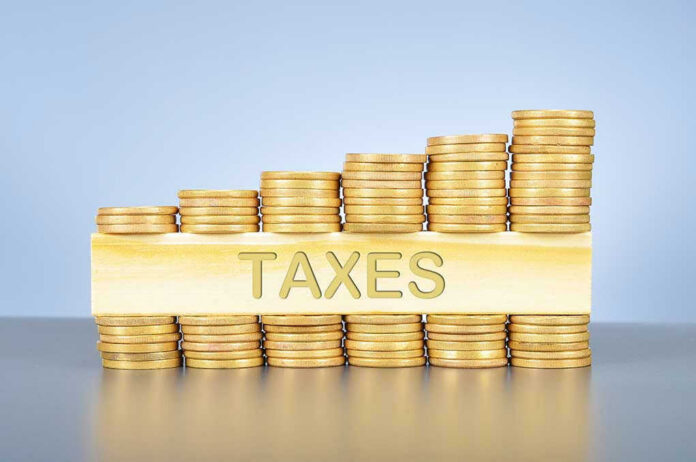
The proposal would impose a one-time 5% tax on residents whose net worth exceeds $1 billion. It reaches beyond stock portfolios into businesses, securities, art, collectibles, and intellectual property, while exempting real property, pensions, and certain retirement accounts.
That scope matters because many ultra-wealthy Californians hold value in privately controlled companies and IP-heavy ventures. Taxing those assets invites valuation fights, liquidity problems, and legal complexity—exactly the kind of friction that turns “simple fairness” slogans into messy reality.
The retroactive component supercharges the controversy. The plan reportedly would apply based on whether someone was a California resident on January 1, 2026, even though the vote is expected later, in fall 2026.
Retroactivity feels like a rule change after the play, which offends basic common sense and undermines trust—especially among people who already believe Sacramento treats taxpayers like ATMs. Brin’s late-2025 relocation, tied to that calendar trigger, shows how a single date can move enormous decisions.
Google co-founder rips California billionaire tax: 'I fled socialism' https://t.co/kIJkTgMwya
— FOX Business (@FoxBusiness) April 27, 2026
The Conservative Read: Mobility Is the Ultimate Check on Government Overreach
American federalism works when states compete. Low-tax states lure employers; high-tax states promise services. The wrinkle is that California’s proposal targets people who can leave without losing their income stream. That isn’t a moral judgment; it’s a structural fact.
Conservative instincts point to predictability, property rights, and incentives: when government acts like wealth is a public utility to be “tapped,” it encourages defensive behavior—migration, asset shifting, delayed investment—rather than the long-term building that creates jobs.
Brin’s critics can argue his rhetoric is overheated, because California is not the Soviet Union. That’s fair as far as it goes.
The stronger question is whether the policy logic echoes something Americans have rejected for generations: the idea that the state can set an arbitrary threshold and then claim partial ownership of a person’s accumulated assets, not just their income. A one-time wealth tax also tempts lawmakers to do it again. Voters know “one-time” often means “first time.”
What Happens Next: Voters, Messaging, and a National Test Case
The campaign will hinge on two competing fears. Supporters will warn that without new revenue, California can’t meet obligations and inequality will worsen. Opponents will warn that the state is gambling with its economic base, chasing symbolic wins while inviting high-end flight and endless litigation over valuations.
Limited data appears in the available research about polling or economic modeling, so the near-term reality is narrative warfare—who tells the cleaner, more believable story to busy voters.
Brin’s involvement also highlights how modern political fights run on coalitions built quietly, then funded loudly. The research indicates he worked with other like-minded Californians to build support against the measure.
That matters because voters tend to discount billionaire activism as self-interested, yet they also distrust Sacramento’s appetite for new taxes. The side that convinces middle-aged homeowners and retirees that their own stability is on the line—directly or indirectly—will likely control the outcome.
Google co-founder rips California billionaire tax: ‘I fled socialism with my family in 1979’ https://t.co/S1OfmAuMX9 via @BIZPACReview
— BPR (@BIZPACReview) April 28, 2026
The deeper lesson is that California’s wealth tax doesn’t just ask, “Can the state raise money?” It asks, “What kind of state is California becoming?” Brin’s Soviet comparison, dramatic or not, forces that question into the open.
If policymakers want a durable tax system, they must prove it’s transparent, non-punitive, and predictable. If they can’t, the most mobile residents will keep voting with their feet—long before November ballots ever arrive.
Sources:
Google co-founder rips California billionaire tax: ‘I fled socialism’