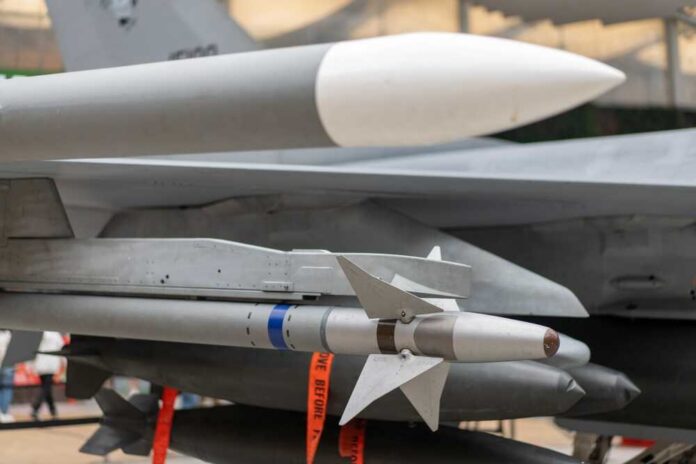
The United States burned through nearly half of some of its most prized long‑range missiles in just weeks of war with Iran, opening a rare window into how thin American firepower can get when the shooting starts.
Story Snapshot
- The U.S. used at least 45 percent of its Precision Strike Missiles in the Iran war.
- CSIS analysts say rebuilding key missile stocks will take one to four years.
- Heavy use of Patriots, Terminal High Altitude Area Defense, and Tomahawk missiles signals a broader strain.
- Experts warn a “window of vulnerability” for future conflicts as inventories remain low.
The Iran war exposed how fast U.S. high-end missiles disappear
The war with Iran started fast and hard. In just the first 39 days, U.S. forces hit more than 13,000 targets across Iran and the region.
To do that, the military leaned on seven of its most advanced missiles and air defense systems: Tomahawk cruise missiles, Joint Air-to-Surface Standoff Missiles, Precision Strike Missiles, Standard Missile‑3, Standard Missile‑6, Terminal High Altitude Area Defense interceptors, and Patriot interceptors. These are the expensive “crown jewels” built for high-threat fights, including a possible war with China.
Analysis by the Center for Strategic and International Studies found that for at least four of those systems, the United States likely expended more than half of its prewar inventory. That is not a marginal drawdown. It is the kind of burn rate that turns a weeks‑long campaign into a strategic problem.
CSIS estimated that rebuilding those seven key munitions to prewar levels will take between one and four years, even as missiles already on contract roll off production lines. In plain terms, the missiles were used far faster than they can be replaced.
U.S. has used 'virtually all' of its long-range precision missiles during Iran war: Reuters https://t.co/Hdd5oEHHXO
— CNBC (@CNBC) August 4, 2026
Precision Strike Missile stocks were small, then heavily used
The Precision Strike Missile sits at the center of the concern. This new ground‑launched missile is fired from Army Multiple Launch Rocket System and High Mobility Artillery Rocket System launchers and replaces the older Army Tactical Missile System with longer reach—over 500 kilometers.
Before the war, the inventory was already small because the missile had just begun production. Deliveries since 2023 totaled only about 90 missiles. That means even modest use would hit the stock hard.
CSIS and other reporting estimate that between 40 and 70 Precision Strike Missiles were fired in the Iran campaign. One Army official went further, telling analysts that the “entire inventory of Precision Strike Missiles” had been expended, though other officials said some missiles remained.
A CSIS summary aligned with classified Pentagon data and concluded the United States used at least 45 percent of its Precision Strike Missile stockpile. For a weapon tied directly to the Army’s long‑range precision fires modernization effort, that level of depletion touches real readiness, not just accounting.
Air defense interceptors and Tomahawks were also hit hard
The strain was not limited to ground‑launched missiles. CSIS reported that the United States fired almost half of its Patriot air defense missile stockpile and more than half of its Terminal High Altitude Area Defense interceptors during the campaign.
Patriot and Terminal High Altitude Area Defense are the backbone of U.S. and allied protection against ballistic and cruise missile attacks, the very weapons Iran and its proxies throw at bases and cities. Depleting them so deeply in one theater means fewer interceptors are available to deter or defend in places like Eastern Europe or the Indo‑Pacific.
Tomahawk cruise missiles were also used in large numbers. Public reporting and expert analysis describe at least hundreds, and likely more than a thousand, Tomahawks launched against Iranian missile, drone, and command targets. These long‑range stealth missiles are not cheap and not stocked in endless quantities.
CSIS estimated that land attack missiles, Terminal High Altitude Area Defense, and Patriot interceptors will take three or more years to return to prewar levels, while Standard Missile‑3 and Standard Missile‑6 will need around two years. That timeline reflects a simple reality: high‑end precision weapons are slow to build and easy to spend.
Months to years before stocks recover, creating a risk window
The Center for Strategic and International Studies went beyond simple counts and described the strategic risk. Its assessment said the United States has enough missiles to keep fighting in Iran, but warned that remaining stockpiles may be insufficient for future conflicts if another major war breaks out soon.
A CSIS adviser described this gap as a “window of vulnerability” that will last for several years, until inventories return to old levels and then several more years before they reach what war planners consider safe.
For the Joint Air‑to‑Surface Standoff Missile and Precision Strike Missile, CSIS projected replenishment would take several months to a year. For other systems, especially air defense interceptors, timelines stretch longer. Defense Secretary Pete Hegseth echoed that view when he said it would take “months and years” to rebuild missile inventories, depending on the system.
That gap invites trouble: deterrence is strongest when enemies know the United States has deep magazines. Thin stocks and long rebuild times test that confidence.
Opaque data, clear pattern: burn rates outpace production
Exact missile numbers remain classified, and public estimates rely on budget documents, production data, and anonymous officials. That secrecy limits precise outside verification, but the pattern is clear.
Think‑tank studies, major news outlets, and even Pentagon advisers now agree that the United States burned through large chunks of top‑tier munitions in the Iran war and that industry cannot quickly restore those stocks. This matches a larger trend after recent conflicts: modern wars consume smart weapons faster than Washington plans, while production lines stay slow and fragile.
For older readers who remember Cold War promises of “overwhelming” firepower, this story is a sobering update. America still fields powerful missiles, but the cupboard is not bottomless, and refilling it takes years, not months.
The Iran war did not leave the United States defenseless, yet it did expose how quickly key arsenals can be drained and how long it takes to get them back. That reality will shape every serious debate about China, Russia, and future wars long after the shooting in Iran stops.
Sources:
cnbc.com, youtube.com, militarytimes.com, en.yenisafak.com, cnn.com, chosun.com, businessinsider.com, csis.org, congress.gov, militarnyi.com, heritage.org, americanmind.org, facebook.com, cronkitenews.azpbs.org, reddit.com