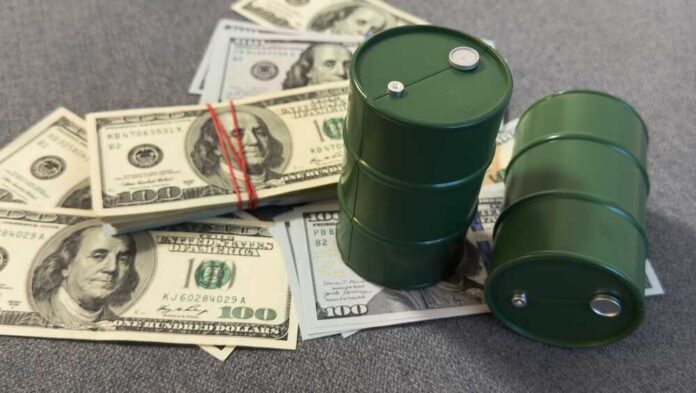
The United States handed Iran billions in oil relief, then yanked it back overnight the moment tankers came under fire.
Story Snapshot
- President Trump’s team gave Iran a 60-day green light to sell oil, then killed it after three tankers were hit.
- U.S. Central Command called Iran’s actions a clear ceasefire violation and launched new strikes.
- Treasury slammed the door on new Iranian oil sales, with only a brief grace period left.
- Iran denies blame and cries foul over the memorandum of understanding, while markets panic.
How Washington Gave Iran Billions, Then Cut Them Off
Just two weeks before the tanker attacks, the United States Treasury opened a door that had been locked for forty years. It issued General License X, a sweeping 60-day waiver that let Iran produce and sell crude oil, petrochemical, and other petroleum products in dollars through August 21.
American refiners could buy Persian oil directly and even use previously blacklisted tankers. Analysts said this could bring Iran billions in new revenue, a huge concession for a regime still under heavy nuclear pressure.
This waiver was not charity. It was part of an interim peace deal and a memorandum of understanding between Washington and Tehran. The deal tied relief to behavior. A U.S. official stressed that the memorandum was “entirely performance-based” and that Iran would “only reap benefits if they exhibit good behavior.”
Trump backed the move by claiming oil money would go to American farm goods, not missiles. For a moment, it looked like old enemies were testing a narrow path to calm.
The Tanker Attacks That Blew Up The Ceasefire
That path collapsed when three commercial vessels crossing the Strait of Hormuz were hit by projectiles and drones. U.S. Central Command said the ships were crewed by civilians and moving through an international waterway when Iran attacked them.
In its public statement, Central Command called Iran’s aggression “unwarranted, dangerous, and a clear violation of the ceasefire.” U.S. officials said the Islamic Revolutionary Guard Corps launched missiles at two tankers and struck a third ship with at least one drone.
The ceasefire built into the peace deal depended on Iran leaving shipping alone. Once tankers were hit, U.S. military forces answered. Central Command announced “a series of powerful strikes against Iran” to impose “heavy costs” for targeting commercial shipping.
The message matched common sense: you do not reward a regime with oil money while it is firing on civilian trade routes. Whether every detail of the intelligence is public or not, the pattern fits years of Iranian pressure tactics in the Strait.
Treasury Slams The Oil Door Shut
Almost instantly, the Trump administration pulled the economic lever. Treasury rescinded the original waiver and replaced it with a narrow document, General License X1. The new license blocked any fresh Iranian oil sales after July 7 and allowed only a short wind-down period until July 17 for deals already in motion.
Money from those remaining sales had to sit in a blocked interest-bearing account, not in Tehran’s hands. In plain terms, the spigot was turned off and the leftover drops were frozen.
Multiple outlets reported the same sequence: tanker attacks, U.S. strikes, then oil waiver revocation in the same news cycle. A U.S. official told reporters, “Iran’s actions in the Strait were wholly unacceptable to the United States and will be met with consequences.”
Oil markets felt those consequences fast. Brent crude jumped around five percent, breaking above the mid-$70 range, as traders priced in fresh risk that one of the world’s key chokepoints was back in play. Energy guests on cable shows called it a wake-up call in a region that never truly sleeps.
Iran’s Denial, The Memorandum Fight, And What’s Missing
Tehran did not quietly accept the punishment. Iranian officials and state media denied responsibility and portrayed the attacks as a reaction to a U.S.-backed shipping corridor that ignored Iranian authority in the Strait.
Iranian outlets complained that revoking the waiver violated the memorandum of understanding, arguing that Washington moved the goalposts after signing. To their public, the United States looked like the aggressor, using sanctions and strikes to reassert dominance after a brief show of goodwill.
BREAKING: President Trump confirmed the U.S. launched what he called “very powerful” retaliatory strikes against Iran after the regime fired rockets at ships, warning that any future attacks would be met with overwhelming force.
“We attacked very powerfully last night,” Trump… pic.twitter.com/xmGDV1IUlw
— Breaking911 (@Breaking911) July 8, 2026
Yet Iran has not put forward specific counter-evidence to match U.S. claims about who fired what and from where. There is no public forensic report from Tehran naming another culprit or matching weapons to a different maker. That weakens its story. On the U.S. side, the case still leans heavily on official statements rather than declassified missile fragments or satellite data.
The logic is simple: Iran has a long record of threatening shipping, so when tankers get hit right after a huge concession, you do not wait for a perfect courtroom file to act.
Why This Fits A Larger Pattern Of Pressure And Risk
This episode slots into a familiar pattern in U.S.–Iran relations. Washington sometimes offers narrow economic relief, like temporary oil waivers, to test whether Tehran will change its behavior. When Iran is linked to attacks on regional shipping, the relief is quickly revoked and sanctions snap back.
Over decades, the Strait of Hormuz has been the pressure point of choice: hit tankers, rattle markets, then deny responsibility. Each time, the burden falls on U.S. intelligence and allied navies to keep trade moving without tipping into full-scale war.
For readers who grew up with the Cold War, this has echoes of old games of brinkmanship, but now the battlefield is a shipping lane and the weapon is an oil waiver.
The Trump administration’s move shows how fast a performance-based deal can die once one side fires shots. It also reminds us that energy policy is not boring paperwork. It is a front-line tool. When you hand a hostile regime billions in oil money, you had better be ready to pull it back the second their “performance” turns into fresh explosions at sea.
Sources:
cnbc.com, thehill.com, bloomberg.com, en.wikipedia.org, wsj.com, instagram.com, facebook.com, ofac.treasury.gov, abcnews.com, bbc.com, youtube.com, aljazeera.com, cbsnews.com