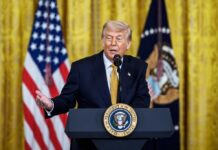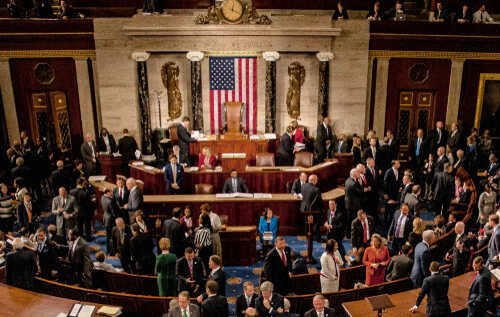
John Thune wants Congress to target the highest AI risks while keeping America’s innovation engine wide open.
Story Snapshot
- Thune backs targeted guardrails for high-risk AI, not sweeping controls.
- His plan centers on consumer transparency and risk-based oversight.
- He has supported a freeze on state AI enforcement while Congress legislates.
- Senate action could come soon, but big details remain in play.
Thune’s Core Message: Regulate Where It Matters Most
Senate Majority Leader John Thune called for a “light touch” on artificial intelligence, with direct rules only for the highest-risk uses. He argues Congress should set clear guardrails without choking off new tools and services that help Americans every day.
His earlier bill framed the approach: give consumers transparency and focus oversight on high-impact systems that can cause real harm or shape key life outcomes. That focus fits a risk-based model many policymakers now favor.
Senate Majority Leader John Thune said Monday that Congress should address the most serious risks from artificial intelligence with limited regulation that protects innovation and keeps the U.S. competitive with China. MORE: https://t.co/KiZpMhbnVx pic.twitter.com/nbegezTcrh
— NEWSMAX (@NEWSMAX) September 15, 2026
Thune has kept his message tight. He warns about powerful systems that touch health, jobs, finance, elections, and safety. He also defends the country’s lead in advanced computing. He says lawmakers should avoid blanket bans and one-size rules that freeze progress.
He wants clear notice to users when AI drives outcomes and line of sight on who is accountable if an AI system fails. That goal threads the needle many conservatives expect: protect people, reward builders, and keep government in its lane.
Why Light-Touch Rules Appeal to Congress and Builders
Risk-based regulation aims to match rules to the level of danger. High-risk systems get tighter checks; low-risk tools face less burden. Supporters say this avoids red tape that would slow useful products while still tackling real threats to safety or civil rights.
Business groups like the Consumer Technology Association favor lighter, uniform federal rules so teams can build and ship across all states without dozens of conflicting rulebooks. That logic resonates with a growth-first, innovation-forward agenda.
Thune’s floor remarks and committee work point to this practical balance. He highlights accountability and security for “highest impact” applications, not blanket control of algorithms or research.
That strategy matches how other countries and standards bodies frame governance: inventory systems, assess risk, apply proportionate controls, and monitor over time.
This is not a tech free-for-all. It is a focused framework that targets where AI can do outsized harm and leaves room elsewhere to compete and win.
The Flashpoint: State Moratorium vs. Patchwork Rules
Thune has also signaled support for a pause on state and local AI enforcement while Congress builds a national framework. He called the House-passed ten-year freeze an open rules question in the Senate, but he has sounded receptive to the idea in a broader “big” package.
Backers say a moratorium avoids a patchwork that confuses users and smothers startups with legal costs. Opponents warn it could sideline genuine protections that states already enforce.
The policy stakes are sharp. A single national rulebook can speed growth and align incentives. But a sweeping pause on state enforcement, without firm federal guardrails, risks an accountability gap.
If Congress presses pause on states, Congress should also press “start” on federal transparency and duties for high-impact systems at the same time. That trade is how you back builders and protect families.
What Happens Next In The Senate
Senate Commerce could mark up AI measures this month. Thune and Senator Amy Klobuchar have worked on bipartisan safety ideas, though final text is still moving.
Thune has kept expectations in check about timing but continues to drive consensus around targeted guardrails, user disclosure, and measured oversight. The goal is a package that earns votes, clarifies duties, and gives innovators certainty without Washington micromanagement.
🔴 Thune pushes Congress role on AI; Trump insists he alone should regulate
Senate Majority Leader John Thune (R-S.D.) said Congress has responsibility to act on AI regulation, backing a "light touch" with "guardrails" for frontier models. He is working with Commerce Chair Ted… pic.twitter.com/NqJ2uwE14E
— NewsTongue (@NewsTongueX) September 15, 2026
Two signals will tell you where this lands. First, watch whether the Senate ties any state moratorium to a firm federal standard with risk tiers, transparency, and clear accountability. Second, look for specific triggers that define “high-impact” uses.
Those lines decide what needs audits, record-keeping, red-team testing, or incident reporting.
Get those right, and America keeps its edge while guarding against the few AI uses that can do real damage. That is the Thune formula in plain terms—and it is defensible.
Sources:
thune.senate.gov, youtube.com, cta.tech, axios.com, matsui.house.gov, politico.com, washingtontimes.com, papers.ssrn.com, arxiv.org, americanactionforum.org