When a sitting president tries to charge a foreign country for the air you breathe, you know the trade fight has left the rails.
Story Snapshot
- Trump wants the cost of Canadian wildfire smoke added onto already steep tariffs on Canadian goods, including autos, alcohol, and cheese.
- He calls Canada’s forest management “willful negligence” and says filthy air is an “unnecessary invasion” costing Americans billions.
- Canadian leaders fire back with hard numbers, pointing to a twelve billion Canadian dollar investment in fire prevention since 2020.
- Trade and legal experts say there is no clear way in United States law to tariff a neighbor for smoke from natural wildfires.
Trump turns a climate crisis into a tariff weapon
President Donald Trump did not blame weather or bad luck for the thick smoke rolling into northern states from hundreds of Canadian wildfires. He blamed Canada.
On Truth Social, he accused Canada of “willful negligence” in forest management and said the United States was being “unnecessarily invaded by filthy, polluted, and unhealthy air” from the north. That language matters. “Invasion” is the same word he has used before to trigger national security powers and justify emergency tariffs.
.@USTradeRep Ambassador Greer explains the tariffs on a set of Canadian imports: "They banned the sale of U.S. liquor and other booze on Canadian shelves. They capped and limited the amount of autos that could be shipped [from] the United States from companies who were reshoring… pic.twitter.com/cQrySGrv1L
— Rapid Response 47 (@RapidResponse47) July 21, 2026
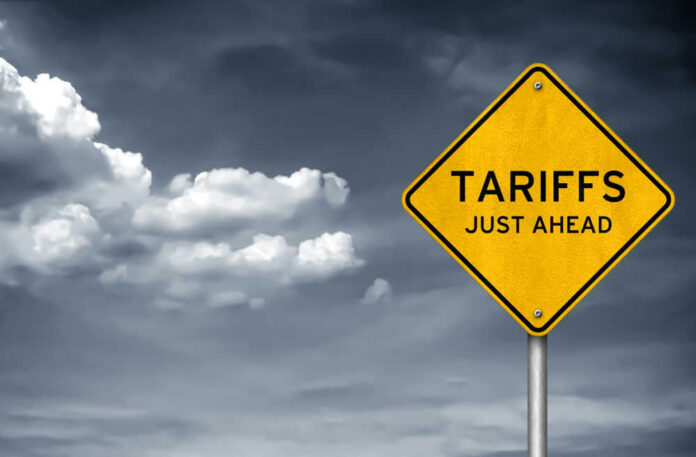
Trump then did what he has done in other fights with Canada: he reached for tariffs. He argued that the smoke was costing the United States “billions of dollars” and that this pollution cost “must be added to the tariffs Canada is currently paying.” Those tariffs are already high.
After earlier moves tied to drugs and immigration, the average tariff on Canadian imports has climbed to about 8 percent, up from under 3 percent just two years ago. A 50 percent hit on targeted goods like autos, alcohol, and cheese would turn a trade dispute into a full-blown economic shock.
Lawmakers back the anger, but the law does not back the idea
A group of United States lawmakers from Michigan quickly backed Trump’s fury. In an open letter to Canadian officials, they wrote that their “patience has run out” and complained about business closures and damage to the tourism industry from smoke choking their state.
They warned that, if Canada did not act, Washington might look at direct United States involvement in cross-border firefighting. That threat fits a pattern: use economic pain and security language to push another country’s domestic policy in line with American demands.
The problem is simple. United States trade law has no clear way to bill a neighbor for air from natural fires. Legal analysts point out that key tariff tools, like Section 232 for national security and emergency powers under the International Emergency Economic Powers Act, cover goods and financial moves, not drifting smoke from forests.
A Supreme Court ruling earlier this year also narrowed Trump’s emergency tariff authority, making creative new uses even harder to defend.
Canada answers with money, facts, and a little blunt talk
Canadian officials did not just complain. They brought receipts. Prime Minister Mark Carney answered Trump’s negligence claim by pointing to twelve billion Canadian dollars spent since 2020 on forest sustainability and fire prevention across the country. That money went into aircraft fleets, ground crews, prescribed burns, and early detection systems.
Natural Resources Minister Tim Hodgson said Canada would keep helping the United States with cross-border emergencies and would rather “work together instead of pointing fingers.”
Ontario Premier Doug Ford, a right-of-center leader, was less gentle. He called Trump’s accusation “ridiculous” and “a bunch of rubbish,” and reminded viewers that Canada has often sent firefighters south to help the United States. That matters for anyone who thinks in terms of basic fairness.
If your neighbor spends billions on prevention, sends crews to help you, and still gets blamed for nature itself, the claim of “willful negligence” starts to look more like political theater than a serious case built on facts.
Can you really manage a wilderness the size of a continent?
Trump’s core claim is that Canada is “not properly maintaining” its forests and brush. That sounds simple until you look at a map. Experts note that the Canadian boreal forest covers over five hundred million hectares, much of it remote and uninhabited. You cannot thin, rake, and patrol every mile of that land.
Large wildfires in such regions are not a sign that officials refused to work. They are a feature of a vast, dry, changing climate system that no single country controls.
TRUMP ANNOUNCES 50% TARIFFS ON BROAD RANGE OF CANADIAN GOODS
President Trump is escalating a trade fight with Canada. WWNN's Stacy Lyn reports:: “President Trump announced new 50% tariffs on a broad range of Canadian goods including wine, hockey equipment, furniture, clothing,…
— Worldwide News Network (@WorldwideNNX) July 21, 2026
Here is the hard truth that many scientists stress: climate conditions, including hotter, drier summers, are driving longer and more intense wildfire seasons across North America. Trump rejects that link and pins the blame almost entirely on Canadian management. That split matters for policy.
If you say the problem is only negligence, then tariffs and threats seem logical. If you admit that climate is a major driver, then the real tools are shared planning, adaptation, and serious energy debate, not punishing grocery shoppers with higher cheese prices.
A trade war that starts with smoke ends at your wallet
This fight does not stay in the clouds. It lands in your checkout line. Past Trump tariffs on Canada, including earlier broad measures under emergency powers, already drove up costs for lumber, autos, and basic household goods. Higher border taxes hit importers first, then flow into prices paid by families and small businesses.
Environmental groups warn that these “tariffs blow up long United States–Canada environmental partnership” and mostly hurt United States consumers instead of fixing any real forest policy problem.
From a common-sense view, the core question is balance. Strong borders and fair trade matter. So does honesty about what government can control. Charging Canada for smoke from fires that rage across half a continent, while your own courts clip your tariff powers, stretches that balance to breaking.
Air does not stop at customs. Blaming it like a bad shipment may play well in a rally. It will not make the next wildfire season any shorter, or your next grocery bill any smaller.
Sources:
apnews.com, bbc.com, easternherald.com, youtube.com, en.thairath.co.th, facebook.com, sej.org