When a state can call your words its own, your First Amendment rights shrink to a whisper.
Story Snapshot
- Justice Clarence Thomas warned that California turned private teachers into state messengers through its medical training rules.
- The Supreme Court declined to hear the case, leaving the Ninth Circuit’s ruling in place.
- California says instructors can disagree with implicit-bias theory while still covering it for credit.
- The core fight is over who is speaking: the state or private instructors.
What sparked the fight: a mandate inside medical licensing
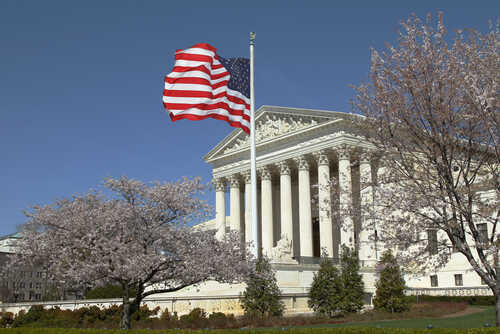
California links medical licenses to continuing education. To keep a license, doctors must complete courses that now include material on implicit bias and its effects on patient care. Justice Clarence Thomas, joined by Justice Samuel Alito, said this crosses a constitutional line when private instructors must carry the state’s message to earn course credit. He argued that the First Amendment applies when the government forces private speakers to communicate its viewpoint.
The Ninth Circuit called these state-approved courses government speech. That label matters. Government speech sits outside the Free Speech Clause. If the message is the state’s own, the First Amendment does not restrain it. The appellate court relied on California’s long regulation of medicine, control over eligible content, and the public’s likely tie between the courses and the state. That framing ended the case in the lower courts before any balancing test even began.
Thomas’s core warning: licensing cannot swallow free speech
Thomas drew a sharp line. He said the state did not publish its own lesson or hire its own teachers. Private instructors designed and delivered the classes. Forcing those instructors to include the state’s preferred topic is compelled private speech, not government speech. He wrote that a state cannot regulate its way out of First Amendment scrutiny simply by stamping “approved” on a private course and conditioning licenses on that approval. That point tracks common sense and long-standing conservative views on limited government.
That warning gets stronger when the message is disputed. Thomas read the rule as pushing a specific view: that implicit bias causes health disparities. He said the mandate leaves teachers with no choice but to present the topic in a way that affirms the state’s view. California counters that instructors may openly disagree and still meet the standard, even telling students they only cover it to comply with the rule. The gap between “include” and “endorse” sits at the center of the clash.
California’s defense: regulation, not indoctrination
California argues it has broad power to set training for licensed doctors. It says the rule does not force belief or silence debate. The state’s filing to the Supreme Court said instructors may dispute implicit bias, flag the requirement itself, and teach strategies without pledging loyalty to a theory. The state urges courts to treat these credit-bearing courses as government speech built into a licensing system that protects patients. The Ninth Circuit agreed, and the Supreme Court let that stand.
🚨 JUST IN: Justice Clarence Thomas BLASTS California for forcing doctors' required medical classes to include woke "IMPLICIT BIAS" training
"First Amendment protections do NOT give way simply because a State heavily regulates speech."
"We should not permit the… pic.twitter.com/rFtGDM9do9
— Eric Daugherty (@EricLDaugh) November 16, 2026
That defense raises a hard practical question. If the government can relabel private teaching as its own speech by supervising content and awarding credit, then any licensed field could be next. Accountants, teachers, contractors, therapists, and lawyers all live under licensing and continuing education. The line between “public interest oversight” and “forced viewpoint” must hold, or the First Amendment becomes weakest where people need it most—when the government controls your livelihood.
The road ahead: a doctrine begging for limits
The Supreme Court’s denial is not a ruling on who is right. It only leaves the Ninth Circuit result in place. Other courts can chart a different path. The key test will be who crafts and owns the message. Where the government drafts the words and hires the speakers, that is likely government speech. Where private speakers design the content and bear their own reputational risks, forced inclusion of a state-favored topic looks like compelled private speech. Thomas’s dissent invites a cleaner boundary.
Policy debates over health disparities will continue. But the constitutional rule must fit friend and foe. If California can force one side of a disputed claim today, another state can force the opposite tomorrow. Free speech protects debate itself, not victory for one theory. Courts should guard that space with bright lines that keep government from turning private professionals into its mouthpieces, even when the cause sounds worthy in the moment.
Sources:
foxnews.com, news.bloomberglaw.com, cato.org, supreme.justia.com