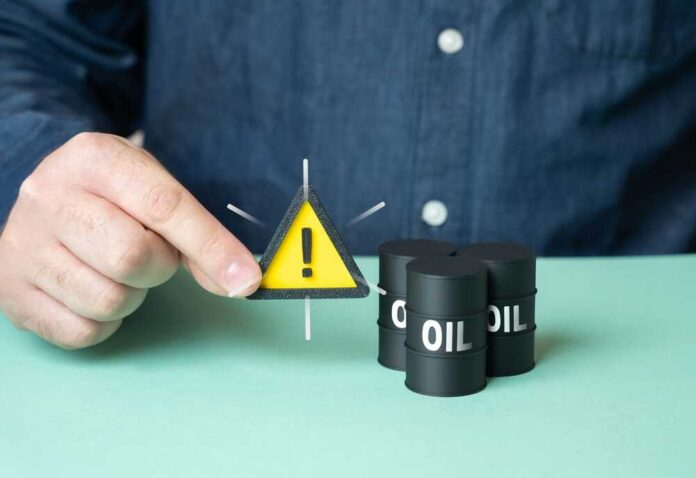
The fight over oil prices has quietly turned into a nationwide test of whether Washington can finally prove Big Oil is rigging the game—or is just chasing a headline.
Story Snapshot
- Federal antitrust regulators say they are now closely watching U.S. oil markets for price-fixing and monopolistic behavior.
- The Department of Justice and Federal Trade Commission urged state attorneys general to help dig into possible collusion and price gouging.
- Senate Democrats point to specific evidence that one top oil executive coordinated with OPEC to keep output low and prices high.
- History shows oil price-fixing is hard to prove, and courts often toss these cases even when public anger is intense.
Washington draws a line on oil prices, at least on paper
U.S. antitrust regulators said in a public letter that they are closely monitoring oil markets for possible price-fixing or market monopolization and want states on board. The Department of Justice and the Federal Trade Commission told state attorneys general that recent big swings in crude oil prices do not excuse companies from antitrust or consumer protection laws.
They warned that businesses cannot use market volatility as cover for anticompetitive behavior, fraud, or collusion that harms Americans. For everyday drivers, this is Washington’s way of saying: “We see these gas prices, and we are not looking away.”
U.S. antitrust regulators said Friday they are closely monitoring oil markets for potential price-fixing or market monopolization, and they urged state attorneys general to assist in investigating unlawful conduct. https://t.co/Pz6Rkfwf5g
— CBS News (@CBSNews) July 3, 2026
The same letter urges states to lean on their own price-gouging laws when markets are disrupted. Federal law mainly targets collusion and fraud, but many states have special rules that kick in during emergencies or wild price spikes.
Regulators are trying to build a joint front: Washington tackles secret agreements and market manipulation, while state attorneys general go after retailers that might exploit a crisis at the pump. On paper, it is a tough talk moment. The real question is whether it turns into real cases or fades after the news cycle shifts.
From talk of collusion to named names and concrete claims
This latest push did not come out of thin air. Senate Democrats already sent a detailed letter to the Department of Justice, pointing to evidence that Scott Sheffield, former chief of Pioneer Natural Resources, colluded with the Organization of the Petroleum Exporting Countries to cut output and drive up prices for Americans.
According to the Federal Trade Commission’s complaint, Sheffield worked to coordinate “anticompetitive output reductions” between U.S. producers and OPEC to pad profits at the expense of U.S. households and businesses.
The Federal Trade Commission allowed Exxon’s giant purchase of Pioneer but barred Sheffield from Exxon’s board, which shows regulators saw his conduct as serious enough to warrant personal punishment.
Lawmakers did more than express outrage. They tied alleged collusion to real money out of your wallet. Their letter estimates that industry coordination may have helped push crude oil prices up over $23 per barrel and retail gasoline up about 94 cents per gallon compared with pre-pandemic levels. That would mean roughly $500 per year in extra fuel costs for a typical household car.
From a common sense view, this hits two pressure points at once: erosion of market competition and a hidden tax on working families. If those numbers stand up in court, they do not just justify investigation; they demand it.
Why proving price-fixing in oil is so hard, even when it smells bad
Price-fixing sounds simple: competitors agree to keep prices high instead of competing. The Federal Trade Commission’s own guidance says agreements among competitors to set prices or limit discounts are per se illegal under the Sherman Act. But oil is a global commodity, and legitimate parallel behavior can look a lot like collusion.
Companies watch the same supply-demand data, the same wars, the same shipping routes. When they all raise prices at once, that alone is not proof they met in a back room and plotted.
Courts remind regulators of this limit again and again. In one case, the U.S. Court of Appeals for the Second Circuit affirmed dismissal of price-fixing claims against several oil companies because plaintiffs could not show proper antitrust injury and tried to stretch U.S. law over mostly foreign trading activity.
Traders complained about alleged manipulation of Brent crude benchmarks, but the court ruled that applying the Commodities Exchange Act to that foreign conduct was improper and that the plaintiffs were not directly in the manipulated market.
This kind of decision is a warning sign: even when the public suspects foul play, judges demand tight evidence and clear legal authority, especially when global markets are involved.
Big Oil, big lawsuits, and a pattern of anger without clear wins
Anger at oil prices often turns into lawsuits and political letters. The City of Baltimore has a class-action case claiming major U.S. shale producers conspired with OPEC to limit production and raise prices, targeting companies like ExxonMobil and Pioneer.
Law firms publicize investigations into alleged oil price-fixing, inviting businesses to join claims that producers and refiners kept gasoline and diesel prices higher than true competition would allow.
In Michigan, the attorney general filed a major antitrust suit accusing fossil fuel companies of working like a cartel, not just by selling a harmful product but by blocking alternatives and suppressing cleaner energy technology.
Neutral research shows a pattern: many of these cases settle or get dismissed without courts making a clear finding that oil companies illegally fixed prices. Economic studies and central bank analysis often tie oil shocks more to supply disruptions, conflict, and basic global demand than to proven collusion.
That does not mean price-fixing never happens—history of Standard Oil shows that one dominant player did use aggressive tactics and local price cutting to control markets. But it does mean modern regulators face an uphill climb proving that today’s higher prices come from secret deals rather than messy realities of war, shipping routes, and policy choices.
Where this leaves consumers who just want fair prices
For older Americans who remember gas lines in the 1970s and $4 gas after hurricanes, this latest wave feels familiar. Politicians call for probes, letters fly, and regulators warn companies not to cross the line. Yet real relief at the pump usually comes from more supply, less conflict, or slower demand, not from court victories.
From a common-sense standpoint, the healthiest outcome would be twofold: strong enforcement when there is solid proof of collusion, and a clear limit on political grandstanding that treats normal market pain as criminal behavior without evidence.
Right now, the federal government’s monitoring of oil markets is more like turning on floodlights than making arrests. The Department of Justice and Federal Trade Commission are saying they expect honest competition, and they now have at least one named example—Scott Sheffield and OPEC—to justify deeper digging.
Whether that digging uncovers a wider scheme or shows mostly lawful behavior under tough global conditions will determine if this moment becomes a turning point in energy antitrust, or just another headline that fades when the next crisis hits and prices swing again.
Sources:
cbsnews.com, linkedin.com, otterrockradio.com, reddit.com, oilprice.com, taylormartino.com, kellerrohrback.com, democrats.senate.gov, ftc.gov, southerncalifornialawreview.com, lit-antitrust.aoshearman.com, en.wikipedia.org, sjvsun.com, wsj.com, bostonfed.org