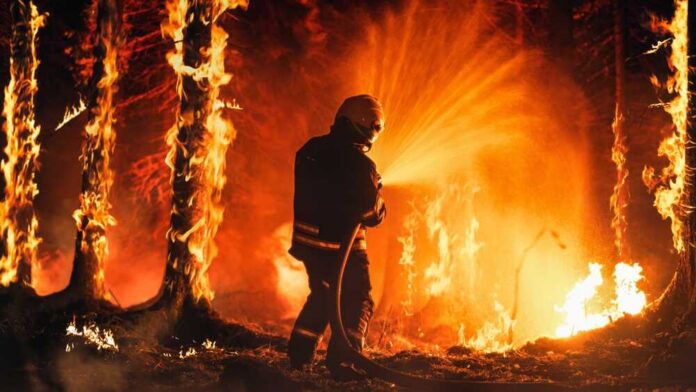
Wildfires around Spokane ripped through neighborhoods so fast that 600 structures are gone and tens of thousands fled with minutes to spare.
Story Snapshot
- Officials say about 600 homes and buildings are destroyed in eastern Washington.
- Roughly 5,000 homes evacuated; fast-moving fires jumped natural barriers.
- Fires spanned more than 250,000 acres statewide as crews battled over a dozen blazes.
- Red flag warnings and high winds set the stage for rapid spread across Spokane County.
Evacuations Surge As Fires Race Into Spokane Area
Authorities ordered mass evacuations as wind-driven flames pushed into Spokane neighborhoods and across the Spokane River. Reporters on the ground described the Old Trails Fire starting around midday and surging through brush and grass before leaping the river and forcing thousands to leave fast.
Officials said about 5,000 homes were told to go, and about 600 homes, businesses, and other buildings are confirmed lost. Damage counts are still being refined as teams gain access.
State leaders warned the fire danger early and often. The National Weather Service issued a rare “particularly dangerous situation” red flag warning for parts of eastern Washington as strong winds and hot, dry air lined up for a bad weekend.
By Saturday evening, state officials said fires had burned across more than a quarter million acres, knocking out power for parts of the Spokane area and stretching crews across more than a dozen incidents.
Why Loss Counts Jump: Speed, Smoke, And Sheer Scale
Damage numbers moved quickly because the fires moved quickly. First responders must focus on life safety, then structure triage, then counting losses. That order can make early totals look like a jump later, even when the situation matches what neighbors saw on the ground.
Wildfire reporting often blends damage from several fires into one tally, which can confuse the picture until incident teams confirm site by site. State wildfire materials caution against early aggregation errors for that reason.
Residents describe fire behavior that sounds like a switch flipping. Grass and brush lit up, wind gusts carried embers, and fences, sheds, and roofs followed.
Officials noted some structures were lost even before they could produce detailed counts, because smoke and active fire made access too dangerous. That kind of spread makes the 600-structure estimate plausible and sadly common when wind, heat, and dry fuel align near homes.
What Officials Are Doing Now To Hold The Line
Firefighters are cutting lines, using dozers where terrain allows, and flying tankers when wind and smoke permit. Mutual aid is flowing from nearby counties and neighboring states. State leaders requested federal help for the Spokane Valley Upriver Fire as homes burned and air crews worked between wind breaks.
More than 4,000 personnel statewide are engaged on multiple fronts, a number that signals how broad the fight is and why full containment will take time.
Wildfires in eastern Washington state forced the evacuation of 60,000 people in the Spokane area while destroying at least 600 homes, businesses and other structures, authorities said Sunday. pic.twitter.com/WNF2EgaIxE
— The Associated Press (@AP) August 3, 2026
Local agencies are also pushing clear public guidance. Officials urge evacuees to heed level “go now” orders the moment they arrive, because delay turns cars into traps. Power crews are staging to restore service once fire behavior calms.
Air quality maps show waves of unhealthy smoke in parts of eastern Washington, so families with health risks should limit time outside and use clean-air rooms if possible. Those steps matter as much as fire lines when communities try to get through a dangerous stretch.
What Comes Next: Hard Weeks, Then Long Rebuilds
Crews will likely face shifting winds, heat, and fresh ignitions from dry lightning. That means numbers will keep changing. Expect evacuation zones to expand or contract by the hour. Structure counts will become more precise as teams do street-by-street checks.
The picture that emerges will not get easier to see, but it will get clearer. Based on official briefings and consistent reporting from major outlets, the current loss and evacuation figures align with the reality Spokane County is living through.
Sources:
en.wikipedia.org, wasmoke.blogspot.com, wfca.com, nytimes.com, komonews.com, npr.org, youtube.com