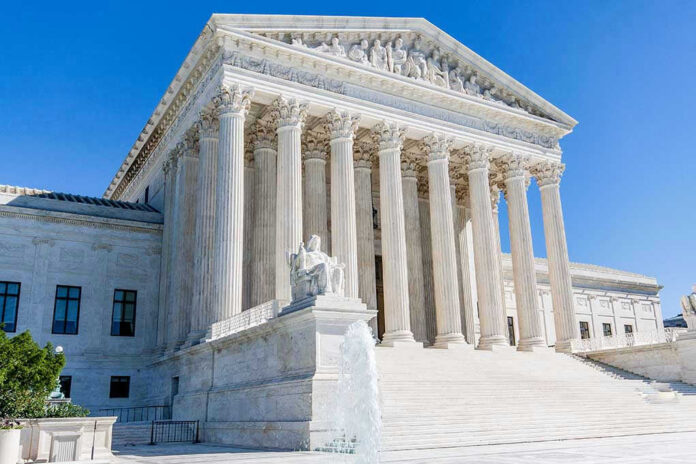
Chief Justice John Roberts just gave President Trump’s $400 million White House ballroom a temporary green light to keep the bulldozers running while the Supreme Court decides its fate.
At a Glance
- Chief Justice Roberts allowed construction on the ballroom to continue “for now” as the full Supreme Court weighs an emergency request from the Trump administration.
- A federal appeals court had already ruled 2-1 that only Congress can authorize the project, upholding a lower court’s halt order.
- The National Trust for Historic Preservation sued, arguing the administration has no legal authority to build without express approval from lawmakers.
- Senate Republicans, led by Lindsey Graham, are pushing a bill to fund and formally authorize the $400 million project.
Roberts Hits Pause on the Pause
The order came Friday, and it does not settle anything permanently. Roberts simply let work continue while the full court decides whether to step in and overturn the lower court rulings that blocked the project.
The administration’s solicitor general had asked for exactly this kind of breathing room one week earlier, framing the halt as an unjustified intrusion on presidential authority over the White House grounds.
Supreme Court chief justice allows work on Trump’s $400M White House ballroom to continue for nowhttps://t.co/4HBmPx7mKM
— Phil Stripling (@civex) August 21, 2026
The request reached the Supreme Court after the administration lost at two lower levels. A federal judge first ruled in March that Trump could not build the 90,000-square-foot ballroom on the demolished East Wing site without congressional approval.
The U.S. Court of Appeals for the D.C. Circuit agreed in August, splitting 2-1, and wrote pointedly that a ballroom’s fate “is for Congress to decide and is not a matter for Executive self-help”.
Why The National Trust Says The Law Is Clear
The National Trust for Historic Preservation, the group that sued to stop the project, has stuck to one argument from day one. Its president, Brent Leggs, said flatly that “only Congress can authorize the construction of a ballroom at the White House.”
The group’s court filings go further, insisting the administration has “no unilateral legal authority—constitutional, statutory, or otherwise” to build on the demolished East Wing site without lawmakers signing off.
That argument leans on the Constitution’s Property Clause, which gives Congress control over federal property. The appeals court judges echoed a phrase worth remembering: every president is “a temporary tenant, not the owner” of the White House.
It’s a blunt way of saying the building outlasts whoever occupies it, and that matters when a president wants to knock down a wing and pour $400 million into a new one.
Congress Tries To Solve The Problem By Writing A Check
While the courts argue over authority, Senate Republicans are trying to make the whole dispute moot. Lindsey Graham introduced the White House Safety and Security Act, which would appropriate $400 million for the ballroom project directly through Congress.
If lawmakers pass it, the legal fight over presidential overreach largely evaporates, because Congress would be the one doing the authorizing everyone agrees is required.
Graham has framed the ballroom as more than a party space, tying the push to security upgrades and even invoking the recent assassination attempt near the White House as justification for moving fast.
Critics see a scramble to retroactively bless a project the courts already flagged as unlawful. Either way, the bill puts the real fix in the right branch’s hands: the one the Constitution actually assigns this job to.
What Happens Next
Nothing here is final. Roberts’ order keeps crews working while the full Supreme Court decides whether to take up the case, and the National Trust has already asked the justices to shut the project down again while they consider it. If Republicans in Congress believe in this ballroom, the cleanest path was always a vote, not a courtroom workaround.
Sources:
apnews.com, reuters.com, congress.gov, abcnews4.com