President Trump just turned his fire on ExxonMobil and Chevron, accusing them of getting rich off a war he ordered while drivers choke on $4 gas.
Story Snapshot
- Trump says ExxonMobil and Chevron made “too much money” during the Iran war and he “doesn’t like it.”
- The two companies reported about $26.5 billion in profit in one quarter as oil prices spiked.
- Trump now wants Big Oil to “give some of that back” through lower gasoline prices.
- Soaring fuel costs are hitting families hard and becoming a major political risk for the White House.
Trump publicly confronts his longtime allies in the oil industry
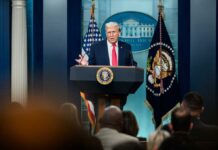
President Trump walked into the Oval Office cameras on August 3 with a clear target, and it was not Iran. It was ExxonMobil and Chevron. He said the companies had made “too much money” off high oil prices during the Iran conflict and bluntly added, “I don’t like it.”
For a president who often praises business and markets, he stressed that, despite being a “big free enterprise guy,” even he thought these profits crossed a line.
Trump did not speak in vague terms. He called the firms out by name, repeating “Chevron, too much money. ExxonMobil, too much. Too much money.” That kind of rhetoric matters.
It signals a rare public clash between a Republican president and the country’s largest oil companies at the exact moment their earnings are soaring, and voters are staring at a gas pump that feels more like a tax on everyday life.
Windfall profits follow the Iran war supply shock
The numbers behind Trump’s anger tell a stark story. In the second quarter, ExxonMobil reported about $14.5 billion in profit, roughly double what it made in the same period a year earlier.
Chevron posted around $12 billion, almost four times its prior year result. Together, that is about $26.5 billion made in just three months as the Iran war squeezed global oil supply and pushed crude prices and refining margins sharply higher.
President Trump says that despite high oil prices, companies like Chevron and Exxon Mobil are making "too much money," amid the U.S. — Iran war: "I don't like it… They ought to give some of that back to the public." pic.twitter.com/pcYg3BlsRf
— CSPAN (@cspan) August 3, 2026
That boom did not appear out of thin air. The war, plus disruptions in the Strait of Hormuz, tightened oil flows just as global demand stayed strong.
Market reporters say United States crude averaged in the mid‑$90s per barrel between March and June, up from about the mid‑$60s before the conflict.
When the price of the main input for gasoline jumps that fast, companies that own wells and refineries see both sides of their business swell at once.
Drivers pay more at the pump while Big Oil cashes in
While ExxonMobil and Chevron celebrated record quarters, American drivers paid for it at the pump. Nationwide gasoline prices climbed from under $3 before the war to about $4 a gallon, a rise of more than thirty percent in a few months.
For families already stretched by housing, food, and insurance costs, an extra dollar a gallon is not a “minor cost.” It is the difference between a full tank and another bill left for later. That is why Trump’s comments land differently for many voters.
When companies post eye‑popping profits in a war‑driven shortage while refusing to ease prices, it starts to look less like free enterprise and more like war‑time profiteering.
From shrugging off high prices to demanding givebacks
Earlier in the Iran conflict, Trump brushed off rising fuel costs, saying that gas price increases were a small price to pay for dealing with Iran’s nuclear threat and that “only fools” worried too much about them.
He argued that prices would drop once the war ended and that short‑term pain was worth the long‑term gain. That tone fit a traditional hawkish view: security first, economics later.
🇺🇸⛽ BREAKING NEWS: U.S. gasoline prices have surged over 37% since the Iran war began in late February , with the national average reaching approximately $4.10 per gallon — a jump from around $2.98 before the conflict .
🏛️💰 President Trump has publicly condemned ExxonMobil… pic.twitter.com/9YzptTSssE
— The World Correspondent (@TheWorldCorresp) August 4, 2026
Now, as the war drags on and quarterly earnings roll in, his stance has shifted. Trump is urging ExxonMobil and Chevron to “give some of that back to the public” and “cut the retail price, the consumer price.”
That sounds closer to a kitchen‑table view: support American energy, but not when it feels like a handful of boardrooms are cashing in while the rest of the country eats the bill. Political pressure from angry motorists and worried Republicans ahead of midterm elections likely reinforces that shift.
Can Big Oil defend these profits in the court of public opinion?
Executives and market analysts would argue these profits simply reflect global prices and supply, not any scheme to hurt consumers. Oil companies do not set world crude benchmarks by themselves, and refining margins rise when shortages bite.
On paper, that logic holds. But optics matter. War plus record profits plus $4 gas is a toxic mix in American politics, especially when the same companies return billions to shareholders through stock buybacks and dividends.
President Trump’s demand is straightforward: if you are making historic profits “based on a shortage” created by a war your own country launched, you should show some loyalty to the public that made your business possible.
That could mean lower pump prices, more investment in supply, or at least less aggressive buybacks while families struggle.
Whether Big Oil listens will show how far corporate America is willing to go to defend shareholder gains when the commander‑in‑chief himself says, loud and clear, that they have made “too much money.”
Sources:
thenationalnews.com, finance.yahoo.com, barrons.com, aol.com, en.sedaily.com, fortune.com, wsj.com