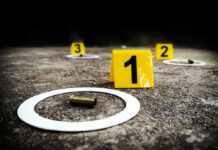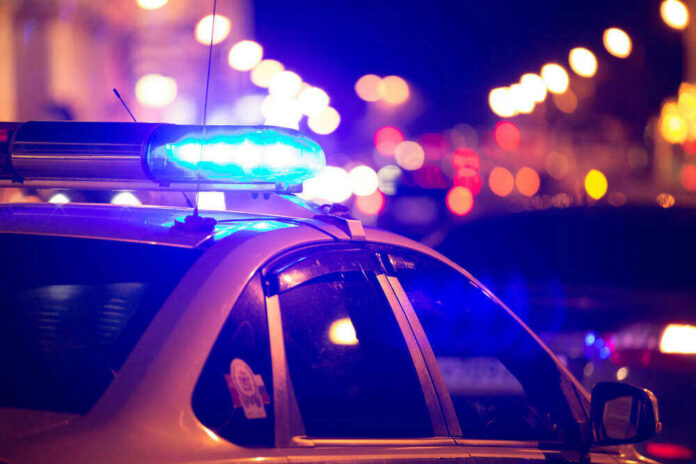
A quiet Ohio street turned into a war zone in minutes, leaving a sergeant, a mother, and her 13-year-old daughter dead while bullets ripped into four other officers and even a police dog.
Story Snapshot
- A late-night break-in call in Rittman, Ohio erupted into a deadly shootout.
- Police Sergeant Scott Ries and three others, including a mother and teen girl, were killed.
- Four responding officers and a police dog were shot under heavy fire.
- Investigators are probing how a domestic break-in became a full-scale firefight.
A break-in call that became a deadly ambush
Rittman Police Sergeant Scott Ries rolled toward Chippewa Trail like he had many times before, answering a 911 call about a break-in and gunshots at a home.
Around 10 p.m. Sunday, officers reached the house and, according to Wayne County Sheriff Thomas Ballinger, “immediately started taking fire.” This was not a tense standoff that slowly escalated. It was instant combat at a front door, in a small Ohio city of just over 6,000 people.
Gunfire tore through the night. Law enforcement now says four people died in that barrage, including Sergeant Ries, the suspected gunman, and two people inside the home.
Joint statements from the Rittman police chief and sheriffs in Wayne and Medina counties confirm Ries died in the line of duty after ten years with the department. This was Ohio’s first line‑of‑duty death of 2026, and it happened on a routine kind of call that officers answer every day.
The victims behind the headlines
Authorities later named the three civilians who never walked out of that house. The suspected shooter was identified as 39‑year‑old Brandon Fazekas. The other two victims were his partner, 44‑year‑old Christine McWilliams, and her 13‑year‑old daughter, McKinley. Officials say Fazekas died from a self‑inflicted gunshot wound.
That means by the time officers fought their way into the home, the man who triggered the chaos had already turned the gun on himself, leaving a shattered family behind.
Ohio is mourning Sgt. Scott Ries, a 10-year police veteran who was killed in a shootout while responding to a reported break-in. A mother and her teenage daughter, identified as the suspects, were also killed. pic.twitter.com/cHPvLARLhY
— Breaking911 (@Breaking911) July 7, 2026
People in Rittman did not just lose a police sergeant. They lost a mother and a middle school girl whose names now sit inside national statistics about violent death. National data shows police kill more than 600 people a year, usually with guns.
But those numbers do not capture what it means for neighbors to see Ring camera clips of a woman taken hostage or to learn that a child on their street will never start high school.
Four wounded officers and a bleeding K‑9
The shooting did not end with the first fatal shots. Four other officers from surrounding agencies were hit as they tried to reach the victims and stop the threat. Three were from the Medina County Sheriff’s Office; one was from the Hinckley Police Department.
Two went to the hospital and were listed as stable the next day, while two were treated right there at the scene and released. These men did what we say we want patrol officers to do: run toward gunfire to protect strangers.
A police dog paid the price with them. K‑9 Vick from the Wayne County Sheriff’s Office was shot and described as in serious condition. That detail may sound small compared with human loss, but it says something deeper.
When bullets are flying into a house so fast they hit the dog, this is not a careful, measured police operation. It is a fight for survival in tight quarters. From a common‑sense view, that reality matters when people later judge each trigger pull.
The investigation and the trust gap
The Ohio Bureau of Criminal Investigation opened an officer‑involved shooting case almost immediately. State investigators are processing the scene, reviewing video, and trying to rebuild the timeline: when the first shots were fired, how fast officers returned fire, and what happened inside the home between Brandon, Christine, and McKinley. That kind of outside review is supposed to give the public confidence that the facts, not politics, will decide what happens next.
Ohio Shooting Leaves 4 Dead, Including Police Sergeant and 13-year-old Girl https://t.co/isVXPPTRFM
— FrontPageDetectives (@FP_Detectives) July 7, 2026
Yet even in a case like this, where the suspect shot himself and the officer deaths are clear, there is a familiar tension. National projects that track police killings warn that many departments release only bare‑bones information.
Here, early reports held back the suspect’s name and gave little detail about the hostage situation and the exact order of shots. Some social media users already pointed to the lack of suspect photos as a red flag, feeding the online habit of assuming there must be a hidden story.
What this tragedy says about modern policing
Step back and this Rittman shooting sits inside a larger pattern. Studies show about 1,000 people a year die in police encounters nationwide, most by gunfire.
States with higher gun ownership also have higher rates of fatal police shootings, in part because officers meet armed suspects more often. On one level, what happened in Rittman is exactly what those numbers predict: a domestic break‑in, an armed partner, frantic 911 calls, and officers walking into an ambush in a gun‑heavy culture.
But statistics cannot decide the moral weight here. For many, this case looks like a textbook example of why strong policing still matters. A violent man with a gun turned a home into a killing ground. Officers rushed in, knowing the risk, and one died with four more wounded.
That is not oppression; that is sacrifice. At the same time, the demand for full transparency is also common sense. Clear facts about the suspect, the victims, and each shot fired protect both grieving families and good officers from rumor and agenda‑driven spin.
Sources:
abcnews.com, youtube.com, facebook.com, security.org, pmc.ncbi.nlm.nih.gov, policeepi.uic.edu, mappingpoliceviolence.us