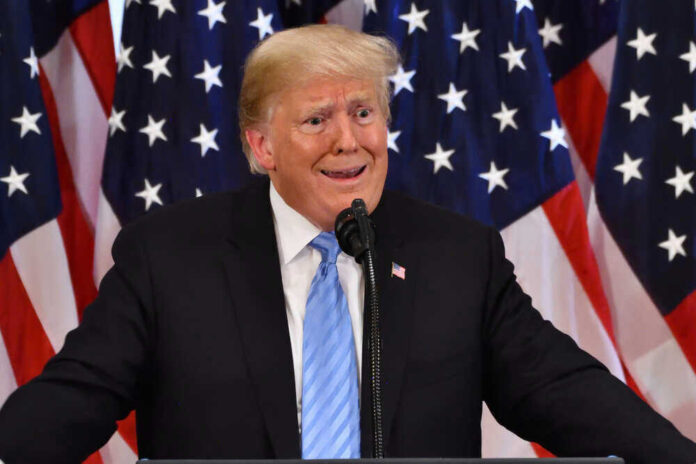
A recent video from President Donald Trump reignited debate as he labeled a Democrat congresswoman “garbage” while criticizing officials over their handling of a major COVID-19 relief fraud case.
Watch the video.
Quick Take
- Trump challenges Minnesota Governor Tim Walz over $1 billion in COVID relief fraud schemes, most perpetrated by individuals of East African descent
- ICE planning enforcement operation in Minneapolis-St. Paul is targeting immigration violations, not specifically the Somali community
- Trump criticizes Rep. Ilhan Omar and progressive leadership for failing to address fraud while championing open immigration policies
- Walz defends the Somali community, arguing against generalizing criminal actions to entire ethnic groups
Fraud Exposes Border Policy Failures
Minnesota has become ground zero for a massive COVID-19 relief fraud scandal that has cost taxpayers over $1 billion. Federal prosecutors have convicted 59 individuals on criminal charges related to these schemes, with most perpetrators identified as individuals of East African descent.
This staggering financial loss reveals the consequences of inadequate vetting and oversight in federal assistance programs. Trump’s focus on this fraud highlights a critical vulnerability in government spending and the need for stronger enforcement mechanisms to protect taxpayer dollars.
Trump OBLITERATES Somalian migrants and Ilhan Omar:
"We're going to go the wrong way if we keep taking in garbage into our country. Ilhan Omar is garbage. She's GARBAGE… and they complain and do nothing but b*tch." pic.twitter.com/DiByu7NAnV
— Libs of TikTok (@libsoftiktok) December 2, 2025
Progressive Leadership Under Fire
Governor Tim Walz faces mounting pressure over his administration’s failure to prevent the fraud epidemic. Trump characterized Walz as “grossly incompetent,” pointing to the governor’s inability to address systemic vulnerabilities that enabled billions in theft.
The controversy underscores a troubling pattern: progressive leaders champion open immigration and expansive welfare policies while failing to implement basic safeguards.
When fraud occurs on this scale, accountability demands that we examine whether loose oversight and ideological commitments to open borders have compromised public safety and fiscal responsibility.
Immigration Enforcement and Community Concerns
Immigration and Customs Enforcement is conducting an operation in the Minneapolis-St. Paul area this week targeting immigration violations. Law enforcement officials clarified that ICE is not specifically targeting the Somali community but will arrest individuals violating immigration laws.
Trump’s comments reflect frustration with progressive sanctuary policies that have allowed criminal networks to operate with minimal consequences. Effective immigration enforcement protects legitimate communities and upholds the rule of law, distinguishing between law-abiding residents and those exploiting the system.
The Omar Question
Trump’s criticism of Representative Ilhan Omar extends beyond personal disagreement to substantive policy concerns. Omar, a progressive Democrat serving since 2019, represents a political faction that consistently opposes border enforcement while supporting expansive social programs.
Trump’s pointed remarks about Omar’s legislative record and public statements reflect conservative frustration with politicians who advocate for open immigration policies while their own constituents suffer from fraud, crime, and resource depletion. The contrast between Omar’s rhetoric and Minnesota’s fraud crisis illustrates the real-world consequences of ideologically driven policy without accountability.
Protecting Taxpayer Investments
The $1 billion fraud scheme represents a direct assault on hardworking Americans who fund government programs through taxes. These resources were intended to support legitimate COVID relief efforts, yet criminals exploited weak oversight to steal from public coffers.
Trump’s administration emphasizes that border security and immigration enforcement are not about ethnicity but about protecting national resources and ensuring programs serve citizens first. Stricter vetting, enhanced monitoring, and swift prosecution of fraud are essential to restoring public trust in federal assistance programs.