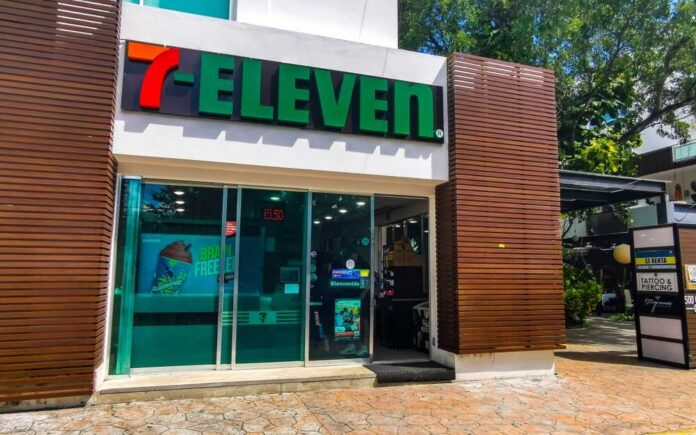
America’s most famous corner store is about to quietly vanish from hundreds of corners—and the reason says more about our changing country than it does about Slurpees.
Story Snapshot
- 7-Eleven’s parent company will close or convert 645 North American stores in fiscal 2026.
- The chain is pivoting hard toward larger, food-focused “Food Forward” locations with much higher sales.
- Many closures target older, underperforming stores as the company prepares for a planned stock offering.
- Franchisees and working-class neighborhoods may carry the real cost of this corporate makeover.
Hundreds Of Corner Stores Are About To Disappear
Seven & i Holdings, the Japanese parent of 7-Eleven, has confirmed it will shut down or convert 645 North American stores during its 2026 fiscal year, which runs from March 1, 2026 through February 28, 2027.
This is not a rumor or a blogger’s hot take. It is spelled out in the company’s earnings documents. The shutdowns come after hundreds of closures in 2024 and 2025, making this the fifth straight year of shrinking store count.
7-ELEVEN TO CLOSE HUNDREDS OF U.S. STORES: Convenience store giant 7-Eleven plans to close hundreds of locations across the United States as part of a sweeping restructuring effort.
Full Story: https://t.co/MHACg6KY6t pic.twitter.com/KSbftxLiKD
— The Dallas Express News (@DallasExpress) July 19, 2026
That 645 figure covers a mix of outcomes. Some locations will close outright. Others will be converted into wholesale fuel sites, where the 7-Eleven convenience store disappears but the gas business stays under a different model.
The company also expects to open about 205 new stores in the same period, but even with those openings, the total number of North American convenience outlets will drop from more than 13,000 to roughly 12,272.
The New Model: Bigger Stores, More Food, Fewer Cigarettes
The old vision of 7-Eleven was a tight little box selling cigarettes, lottery tickets, gas, and packaged snacks. That model is now on life support. The company’s leadership ties the closures directly to a strategic pivot toward larger, “food-centric convenience stores” with prepared meals, fresh offerings, and in some cases seating. In these new food-forward locations, average daily sales per store run about 18% higher than the chain-wide norm.
Cigarette sales have fallen sharply since 2019, taking a major revenue pillar down with them. At the same time, shoppers want better food, not just shelf-stable junk.
Other regional chains like Wawa, Sheetz, Buc-ee’s, and similar players have already built strong followings by making food the star rather than an afterthought.
7-Eleven is finally racing to catch up, and that race demands closing or remaking older stores that do not fit the new design or cannot support upgraded kitchens and equipment.
Costs, An IPO Dream, And The Push To Fix The Math
Seven & i’s filings and media coverage stress one core issue: unit economics. Many of these small boxes simply do not earn enough profit per location to justify current rent, labor, and upgrade costs.
Higher operating expenses than rivals have made the North American model look shaky, especially as inflation and slower spending hit lower-income customers hardest. Before you sell investors on a shiny public stock offering, you clean up weak units that drag on earnings.
The company has already been moving in that direction. Reports show a net reduction of more than 600 stores in 2024 and 2025, including a 444-store cut earlier in this trend.
In newer disclosures, 7-Eleven outlines plans to shut 200 underperforming stores and convert about 350 more into wholesale fuel operations in the current year.
Sale-and-leaseback deals have raised roughly $520 million to fund modernization and the shift toward fewer but more profitable large-format stores.
Who Pays The Price When A “Convenience” Chain Pulls Out?
The company has not released a public list showing which specific 645 stores are on the chopping block, nor has it spelled out how many will become franchises versus pure fuel sites.
It also has not disclosed how many jobs will vanish with these closures, leaving regular people to guess at the human impact. This silence invites suspicion and anger, especially among rural and working-class communities that rely on these stores for fuel, food, and basic goods.
When a big chain pulls out, local competition often drops. Research on store survival shows sales volume is the strongest factor in keeping a site open, and closures frequently hit poorer, nonwhite areas hardest. Fewer outlets can mean higher fuel prices and longer trips for simple errands, a clear hit to already stretched households.
Franchisees Caught Between Corporate Strategy And Local Reality
The harshest criticism of 7-Eleven’s restructuring does not come from its U.S. financial filings. It comes from franchisees overseas. Australian news investigations show devastated franchise owners who describe forced evictions, blocked sales of their stations, and the shredding of their life savings as corporate offices reposition assets.
Consumer advocates and franchise lawyers there call these actions “systematic,” framing them as exploitation rather than simple business adjustments.
Seven & i Holdings (parent of 7‑Eleven North America) is executing a major reshaping of its U.S. store footprint in fiscal year 2026. An earlier filing said 645 7‑Eleven stores would be closed; the company’s latest quarterly presentation broke that down: plans to permanently c…
— MarketMoodz Sentinel (@MM_Sentinel) July 20, 2026
So far, no U.S. court ruling has struck down Seven & i’s right to restructure or label stores unprofitable. Cases like Patel v. 7-Eleven in Massachusetts have actually upheld the chain’s franchise system.
That legal backdrop matters. It suggests franchisees have less leverage than many Americans assume when a global company decides to redraw the map. The law may back the corporation, but that does not erase the moral question: how much should one-sided contract power be allowed to reshape local communities?
America After The Slurpee: What These Closures Signal
7-Eleven’s move fits a wider pattern. Analysts expect around 7,900 U.S. stores of all types to close in 2026. Convenience chains, restaurant brands, and retailers are pruning weaker sites while pouring money into fewer, flashier flagships.
On paper, this is “portfolio optimization.” On the ground, it means more dead retail corners and fewer low-barrier jobs, especially in places that never see the new gourmet-format replacement.
The company’s Food Forward strategy likely will delight urban professionals who want sushi, espresso, and fresh bowls at midnight. It may also leave truck drivers, shift workers, and small-town families with less true convenience than they had before.
That tension is the real story behind the 645-store headline. The chain that once promised “always open” is now asking a harder question: which customers, and which communities, are still worth opening for?
Sources:
foxbusiness.com, finance.yahoo.com, nypost.com, cstoredive.com, restaurantbusinessonline.com, govinfo.gov, abc.net.au, bostonbar.org, seyfarth.com, dallasexpress.com, eciks.org, grocerants.blogspot.com, vettedbiz.com, academic.oup.com, linkedin.com, wobm.com