The Iran war has a $37.5 billion price tag on paper — and almost no one believes that is the real bill.
Story Snapshot
- Pete Hegseth told senators the Iran war carries a $37.5 billion Pentagon estimate.
- The figure mixes money already spent with costs the Pentagon expects through September 30.
- Critics say the true cost could be two or three times higher once you count repairs and long-term damage.
- This fight repeats a familiar pattern: Washington sells a war with tidy numbers, while the real tab quietly explodes.
Hegseth’s $37.5 Billion Number Lands In A Hot Seat
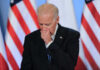
Defense Secretary Pete Hegseth walked into the Senate Appropriations Committee with one headline figure: the Iran war has cost, or will cost, about $37.5 billion this fiscal year. He gave that number under direct questioning, responding, “Senator, the estimate we have as of today is 37.5 billion.”
For an administration selling a larger defense plan, that sounded like a manageable sum. For senators already weary of Middle East wars, it sounded suspiciously neat.
Hegseth stressed that this was the Pentagon’s current estimate, not a personal guess. He framed it as an update to earlier internal numbers: $25 billion in late April, then about $29 billion by mid‑May as repair and replacement costs rolled in.
The trend line is clear even to a distracted taxpayer — every few weeks, the official price climbs billions of dollars, and the war itself shows no real sign of winding down.
Hegseth hearing shows tough fight ahead for Iran war supplementalhttps://t.co/qcXz75urER
— The Hill (@thehill) July 22, 2026
What The Estimate Actually Counts — And What It Leaves Out
Hegseth told senators the $37.5 billion covers “certain aspects” of the war, including military pay, operations and maintenance, and other costs the Pentagon expects through September 30.
That means this is not a clean “spent so far” figure; it combines money already burned with projected expenses still to come. For someone trying to follow the math on their phone, that alone makes the number feel slippery. Is this a bill, a forecast, or a sales pitch?
Reporters who dug into the estimate found big blind spots. CBS News and others cited officials who said the number does not fully include military construction to repair damaged U.S. bases, or the full cost of rebuilding stocks of high‑end missiles and aircraft lost in the fighting.
One CBS report, based on U.S. officials familiar with internal assessments, put the “true” cost closer to $50 billion already, almost double an earlier public figure. That gap is exactly what raises eyebrows: voters hear one total on camera and a much bigger one in the fine print.
Outside Analysts Put The Real Tab Much Higher
Independent analysts and some intelligence officials are blunt: they think Hegseth’s number is far too low. The New Republic cited estimates “upward of $100 billion” once damage, replacement, and wider economic effects are included.
A Harvard scholar who has tracked the war’s daily burn rates says early Pentagon numbers understated even the first few days of fighting and warns that, over time, the Iran war could easily reach a trillion dollars in total costs.
Think back to the first week alone. Pentagon briefers told Congress those initial six days cost about $11.3 billion. Separate estimates put the first 12 days near $16.5 billion, and those tallies did not include pre‑war buildup, base repairs, or replacing destroyed equipment.
When a war eats more than $11 billion in under a week, a $37.5 billion figure months later looks more like a partial snapshot than a full bill.
Why War Costs Are So Easy To Spin
This clash over the Iran war’s price tag fits a long‑running pattern. Official Washington tends to quote narrow, budgetary totals — often just the money Congress has appropriated or the Defense Department has labeled as “operations” in a given year.
Outside experts look at a wider frame: repairs, long‑term equipment replacement, future veterans’ care, interest on borrowed money, and ripple effects across the economy. Change the frame, and your war suddenly triples in cost without a single new missile fired.
Past wars show how big that gap can get. For post‑9/11 conflicts, official budget numbers cluster around $1.5 to $1.9 trillion, while broader academic estimates run from $4 trillion to more than $8 trillion once long‑tail costs are included.
One research project now puts America’s total war spending since 9/11 above $8 trillion, with future veterans’ care and interest potentially pushing the true figure far higher. That history makes it hard to take any single wartime number at face value, especially when it is delivered by politicians in the middle of a funding fight.
The Politics Behind The Price Tag
Hegseth presented the $37.5 billion estimate while arguing the Pentagon needs roughly $67 billion in extra defense money tied to the Iran war and replenishment of U.S. weapons stocks. The White House is pushing a much larger supplemental package approaching $90 billion overall.
When war‑cost messaging sits inside a push for bigger budgets, people who value limited government and responsible spending have every reason to ask whether the numbers are being shaped to sell a policy, not to inform the public.
The deeper problem is transparency. There is no public line‑item breakdown yet that shows exactly what is in the $37.5 billion figure and what is missing. No detailed cost worksheet, no audit laying out base repairs, munitions replacement, logistics, and pay in a form taxpayers can inspect.
That leaves the official number easy to challenge and the higher counter‑estimates just as hard to verify. For a country that has already spent trillions on war in the last two decades, honest accounting should not be too much to ask.
Sources:
cbsnews.com, youtube.com, fortune.com, timesofindia.indiatimes.com, nbcnews.com, jpost.com, newrepublic.com, facebook.com, thefinancialexpress.com.bd, csis.org, costsofwar.watson.brown.edu, ndupress.ndu.edu, warcosts.org, congress.gov, sites.socsci.uci.edu