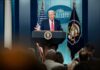
President Trump has moved the childhood vaccine fight from medical meetings into federal policy, and the change is already colliding with doctors’ advice.
Quick Take
- Trump signed an executive order calling for fewer childhood vaccines and more spacing between shots.
- The order says the measles, mumps, and rubella vaccine should be given as three separate shots when available.
- Major medical groups say the split-shot idea does not match the evidence and could hurt vaccine uptake.
- The White House says the new policy reflects scientific review and peer-country comparisons.
What Trump Ordered
Trump signed the executive order at the White House and said children get too many shots too close together. The order says the federal government should recognize “gold-standard” childhood vaccine recommendations and, when possible, give all childhood immunizations at separate medical visits.
Trump signs executive order on new guidelines for childhood vaccines: "Large amounts of vaccines are currently pumped into your child's body. I think it's going to make a big difference. There's something wrong when we see record numbers of autism." pic.twitter.com/xIgxVfAAZv
— TheBlaze (@theblaze) August 10, 2026
The most talked-about part targets the measles, mumps, and rubella vaccine. The order says it should be split into three separate single-disease shots once those products are available in the United States.
Reuters and USA Today reported the same basic shift: fewer routine childhood vaccines, more spacing between visits, and a breakup of the combined MMR shot.
Why Doctors Push Back
Medical groups do not accept the premise that spacing out routine shots makes children safer. Reuters reported that Merck said there is no published scientific evidence showing a benefit to splitting the MMR shot into three, and that using separate components can delay or miss immunizations.
USA Today reported that experts warn separation can increase pain from more injections, leave children unprotected longer, and lower vaccination rates.
AP also reported that the order promotes Trump’s long-held but discredited view that childhood shots should be spaced out into separate medical visits.
That matters because the debate is not just about timing. It is about whether federal policy should follow a schedule built around convenience and timely protection, or one built around the President’s judgment about vaccine burden.
What the Government Says It Has Changed
The White House says the order relies on consultation with advisers and review of scientific evidence. It also says the schedule is being aligned with “best practices” from peer developed countries.
STAT reported that the new framework puts vaccines into three categories and reduces the number of routine childhood vaccinations, while also saying the administration did not provide immunological evidence for the changed schedule.
That gap is central. The policy has changed, but the record provided here does not include a head-to-head clinical study showing that three separate MMR shots outperform the combined shot on safety, immune response, or completion rates. What it does show is a policy move first, and a medical argument second.
The Bigger Fight Behind the Order
This dispute fits a familiar pattern in vaccine politics. When public officials question combination shots, doctors usually answer with the same two concerns: children may get fewer timely doses, and parents may hear the change as a warning that routine vaccines are unsafe.
The current order also revives an old fight over autism claims, which Reuters and CNBC both noted in their coverage.
That is why the reaction was so immediate. To supporters, the order looks like flexibility and a check on one-size-fits-all medicine. To critics, it looks like the federal government stepping away from a schedule that pediatric groups have long defended as safe and effective.
ABC reported that the American Academy of Pediatrics says simultaneous vaccination is safe and effective, with adverse events comparable to separate administration.
One detail should keep the debate grounded. Even with this order, states still control school vaccine mandates.
PBS reported that the federal move does not automatically rewrite state law, though the White House wants states to consider updating their rules to match the new recommendations. That means the order may reshape national guidance faster than it changes everyday school requirements.
Sources:
apnews.com, abc7news.com, washingtontimes.com, cnbc.com, townhall.com, whitehouse.gov, statnews.com