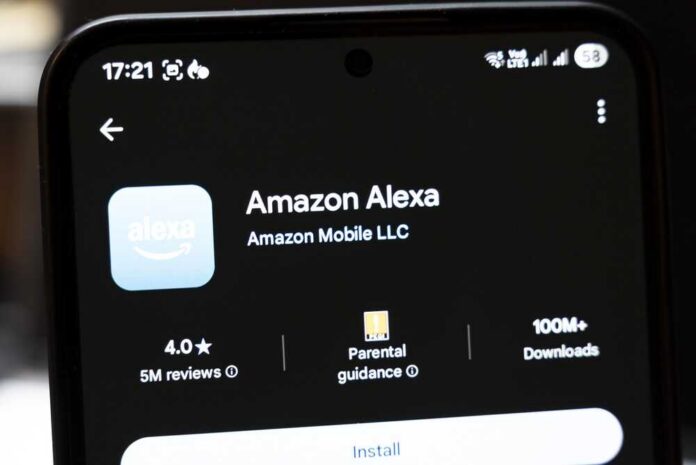
Amazon just made Alexa+ free on select Fire TVs, and with it, your living room voice now rides the cloud by default.
Story Snapshot
- Alexa listens after a wake word, then sends audio to Amazon’s cloud for processing.
- Recordings are kept unless you change settings or delete them yourself.
- Amazon ended a feature that kept some voice data local to devices as it added new AI abilities.
- Fire TV users get privacy toggles, but cloud processing still happens for each request.
What changed when Alexa+ hit Fire TV
Amazon tied Alexa+ to compatible Fire TVs as a free upgrade. That move brings the assistant’s newer, more capable features to the biggest screen in the house.
Amazon’s model is clear: devices listen for a chosen wake word, then send what you say to Amazon’s cloud to figure out the command.
Amazon’s own materials say it holds onto those recordings until you delete them or change your settings to stop saving them. This is not rumor; it is company policy in writing.
Learn out. Amazon makes Alexa+ free on compatible Fire TVs https://t.co/vcXYqmvXEA #FoxNews #tech #digital #privacy #crypto #ai
— Kohei Kurihara – Privacy for all together 🌍 (@kuriharan) September 1, 2026
Coverage in 2025 showed Amazon removed a setting that let some Alexa requests stay local. Amazon tied the removal to the rollout of more advanced, generative artificial intelligence features.
The company said recordings would go to the cloud to process the request, then be deleted if you choose not to save them. Reports said Fire TV units were part of that shift, which means your couch commands now take the same cloud trip as Echo speakers.
What Amazon says you can control
Amazon points users to a privacy dashboard and on-device menus to manage settings. You can choose not to save voice recordings, set how long to keep them, and even tell Amazon not to use them to build new features or for human review.
Fire TV products include controls to limit device usage data, app usage data collection, and interest-based ads in Settings under Preferences and Privacy Settings. Those switches help reduce tracking and profiling. They do not stop the immediate cloud hop after the wake word.
Amazon also says you can view, hear, and delete your voice recordings. You can do this in the Alexa Privacy Hub or by voice command. This is good hygiene if you rely on Alexa and want a lighter data trail.
The bigger point remains: the assistant needs the cloud to do most of the useful stuff, and that trip happens first. Deletion mops up after the fact. Common sense says prevention beats cleanup when it comes to home audio.
Why the cloud path matters on a family TV
The family television sits in the busiest room. That means more chances for kids, guests, and background talk to trigger a wake word. Amazon’s policies confirm that, by default, Alexa sends a recording of what you ask to its servers when it hears the wake word.
Amazon has also said it retains recordings unless you delete them or opt not to save them. After Amazon ended the local-processing option to grow Alexa’s artificial intelligence, that exposure now covers more Fire TV households.
From a common-sense view, the tradeoff is simple. If a feature must ship your voice to a company to work, you deserve tight default limits, short retention, and clear, easy off switches.
Amazon offers controls, but the onus is on the user to find and set them. Households should not need a scavenger hunt to keep family chatter off corporate servers. The kitchen timer can be handy. So can the mute switch and the choice not to save recordings.
Practical steps that actually move the needle
Start with the two biggest wins: stop saving recordings and trim retention. In the account privacy settings, choose not to save voice recordings so Alexa deletes them after processing. If you do keep some, use the shortest auto-delete window.
On Fire TV, turn off device usage data, app usage collection, and interest-based ads in Preferences and Privacy Settings. These steps cut the amount of data tied to your household. They do not break Alexa, but they do narrow the funnel.
Next, set house rules. Teach everyone the wake word and how to mute the microphone on remotes or the television when not in use. Use push-to-talk instead of hands-free where possible.
Review your voice history in the Alexa Privacy Hub every so often and clear anything sensitive. None of this makes your home a bunker. It just lines up the convenience you want with the privacy you expect, without trusting defaults to do the job for you.
Bottom line
Alexa+ on Fire TV means more power and more cloud. Amazon admits the assistant listens for a wake word, then sends audio to its servers to respond. It keeps those recordings unless you tell it not to.
Amazon also removed a local-processing path as it pushed new artificial intelligence features, a change that now includes Fire TV units. Use the settings. Cut the data you do not need to share. Keep the tools you value. That is how you win this trade.
Sources:
aboutamazon.com, digprjsurvey.amazon.com, askalexa.com, amazon.com, cordcuttersnews.com, cnet.com, npr.org