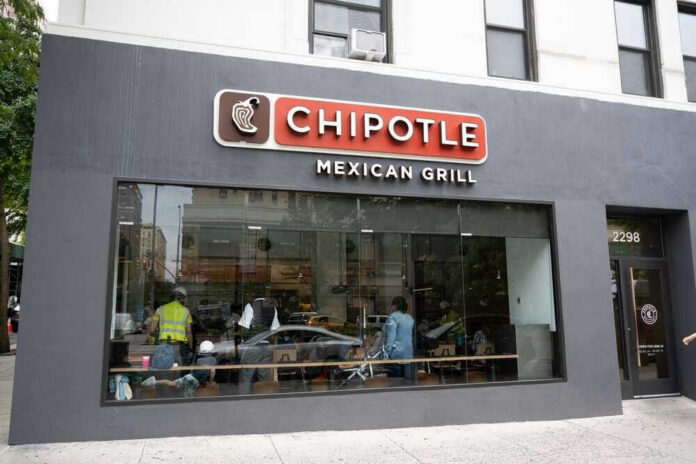
A Minnesota woman says a Chipotle burrito bowl sent her to the hospital with sepsis, and her lawsuit now puts the chain at the center of a fast-moving salmonella outbreak.
Quick Take
- Kristen Behne filed a federal lawsuit after becoming sick after eating at a Chipotle in Roseville, Minnesota.
- Her complaint says contaminated jalapeño peppers caused a salmonella infection that led to sepsis and hospitalization.
- Public health officials linked the outbreak to jalapeño peppers from Sinaloa, Mexico, distributed by Coast Citrus Distributors.
- Chipotle pulled the peppers from restaurants and said it replaced them with product from other growers.
A Lawsuit Built on Timing and Traceback
Behne’s case follows a familiar food-safety pattern: a public outbreak is identified first, then a patient uses that outbreak to argue personal harm.
Reporting says she ate a chicken burrito bowl at Chipotle on June 24, then became ill about 76 hours later and lost consciousness on June 27, which her lawyers say fits the salmonella incubation window.
That timeline matters because foodborne illness cases often turn on the fit between exposure, symptoms, and outbreak data. Here, Minnesota health officials had already tied a wider cluster to Chipotle and said most interviewed patients reported eating there during the same period. The lawsuit uses that context to argue that Behne’s illness was not random, but part of the same contamination problem.
What Public Health Officials Found
The Centers for Disease Control and Prevention said the outbreak involved 345 illnesses across 27 states, with 36 hospitalizations and no reported deaths.
The agency said epidemiologic and traceback data pointed to jalapeño peppers grown in Sinaloa, Mexico, and distributed by Coast Citrus Distributors as the likely source. The Food and Drug Administration also said Chipotle and Qdoba had received affected ingredients tied to the investigation.
Minnesota woman hospitalized with sepsis sues Chipotle over salmonella outbreak tied to jalapeño peppers https://t.co/Xxqre0TKmX
— CBS Mornings (@CBSMornings) August 6, 2026
Chipotle said it removed jalapeños from restaurants where they had been distributed and replaced them with peppers from different growers.
The company said it acted “out of an abundance of caution,” and federal health officials later said they did not consider there to be a current ongoing risk from eating at Chipotle or Qdoba after the peppers were pulled.
Why This Case Draws Attention
Food poisoning lawsuits often face the same hard question: can a plaintiff connect one meal to one illness with enough proof to win damages? That is where this case becomes interesting.
The outbreak gives Behne a stronger foundation than a typical stomach-illness claim, but her lawyers still have to persuade a court that her specific meal caused her infection and that the infection led to sepsis.
Chipotle cases also carry extra weight because the brand has dealt with food-safety crises before. That history makes every new outbreak feel bigger than a single patient’s story.
It also raises the stakes for consumers who expect fast-casual food to be convenient, not dangerous. For readers, the deeper lesson is plain: one contaminated ingredient can ripple from a supplier’s field to a hospital bed in just a few days.
Sources:
cbsnews.com, fox9.com, globalnews.ca, kstp.com, nbcnews.com, facebook.com, oftlaw.com