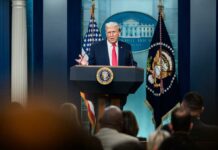
A federal judge said not yet, and that single phrase upended a state-to-state fight over an Immigration and Customs Enforcement shooting case.
Story Snapshot
- A federal judge declined to order Texas to extradite ICE officer Christian Castro to Minnesota.
- Minnesota charged Castro with four counts of second-degree assault and one false-report count tied to a January shooting in Minneapolis.
- Texas Governor Greg Abbott argued Castro may not be a fugitive because he returned under federal orders, not to flee.
- The legal clock now shifts from emergency orders to where, when, and who controls the next move.
The Ruling That Hit Pause, Not Stop
U.S. District Judge Fernando Rodriguez Jr. refused to force Texas to immediately extradite Immigration and Customs Enforcement officer Christian Castro to Minnesota. The judge said Governor Greg Abbott has not yet made a final decision on a rendition warrant, so the court could not step in.
The ruling cleared the way for Castro’s release from a Texas jail while the states keep arguing over venue, ripeness, and timing. The decision did not reach the shooting’s merits or Minnesota’s charges.
Minnesota framed the ask as a straightforward duty under the Constitution’s extradition rules. Texas responded that the case is not ripe, the federal district court is the wrong place, and that its own review of Castro’s status is ongoing.
Abbott told the court he questions whether Castro is a fugitive since federal authorities sent him back to Texas after the operation in Minneapolis ended. That claim, if true, forces a narrow but real legal question about flight versus reassignment.
What Minnesota Says Happened In Minneapolis
Prosecutors in Hennepin County charged Castro with four counts of second-degree assault with a firearm and one count of falsely reporting a crime. The state’s complaint says Castro fired through the front door of an occupied home on January 14, 2026, during a surge operation, hitting Julio Cesar Sosa-Celis in the leg.
The filing cites video and other evidence to support the account. A state judge found probable cause for the charges, which remain allegations at this stage.
The Minnesota Attorney General later outlined the case in a public letter and press materials, repeating that a judge found probable cause and that the shooting injured Sosa-Celis.
The documents press Texas to transfer custody so Minnesota can try the case in its courts. The extradition demand focuses on the standard ministerial process states use every week to move defendants across lines to answer charges.
Texas’s Pushback And The Narrow Lane It Drives
Abbott’s filings argue three things: the federal district court is the wrong forum for a state-versus-state fight, the case is not ripe because he has not refused extradition, and Castro may not be a fugitive because he returned to Texas on government orders.
That is not a merits defense; it is a threshold posture that buys time while Texas vets the paperwork and status questions. The judge’s order tracks that logic, stressing the lack of a final gubernatorial action to review.
Common sense favors clear lines: charge in one state, extradite from another, and let a jury weigh facts. The Supreme Court has already said courts can enforce a governor’s extradition duty.
That doctrine, set in Puerto Rico v. Branstad, limits open defiance. The present ruling does not bless noncompliance; it says the record lacked a ripe refusal to review yet. That means the legal pressure can increase if Texas ultimately says no.
Why This Matters Beyond One Case
Interstate extradition usually runs on rails. Paperwork arrives, the asylum state confirms identity and charge, and the defendant moves. Political friction slows the process when the person is a public official or the policy stakes are hot.
This clash involves an Immigration and Customs Enforcement officer, a shooting amid an immigration surge, and two states with different enforcement approaches. Each side is now using process to shape pace and leverage, not to resolve the shooting itself.
Judge refuses to order Texas to extradite ICE officer to Minnesota | AP News https://t.co/LlGYXvoHEG
— Chris Knutson (@ChrisK107359) August 27, 2026
The next moves are predictable. Minnesota can seek faster review or escalate if Abbott denies the warrant. Texas can keep testing forum and timing arguments while deciding the fugitive question.
Castro will fight extradition, as his lawyer has already said he will not waive it. However this ends, the path points back to a Minnesota courtroom. The only open question is how long the road will be, and who controls the calendar along the way.
Sources:
apnews.com, cnbc.com, aljazeera.com, texastribune.org, cnn.com, nytimes.com