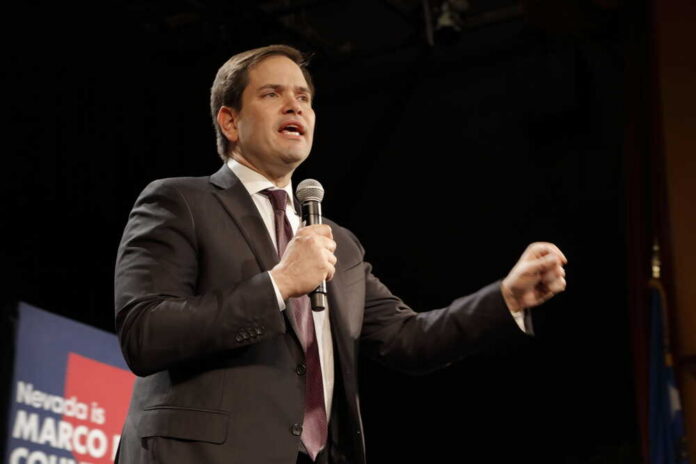
Secretary of State Marco Rubio’s big move just triggered a court showdown, as the State Department prepares to revoke visas from up to 200,000 foreigners in what would be the largest mass visa revocation in American history.
Quick Take
- State Department documents obtained by the Associated Press show plans to revoke B1/B2 visas from people who applied for asylum after entering the country.
- Spokesperson Tommy Pigott says the number of revocations “remains dynamic” and will happen on a rolling basis, not all at once.
- The move builds on an already announced campaign that has revoked more than 175,000 visas this year for rule violations, crimes, and fraud.
- Immigrant-rights groups say past revocations relied on database matches instead of individual review, raising due-process concerns.
- A federal judge recently struck down a related Rubio visa freeze on 75 countries, showing courts are willing to push back on broad visa policies.
What The New Revocation Plan Actually Targets
The plan focuses on people who entered the United States on temporary B1 or B2 visas, meant for business trips or tourism, then filed for asylum once inside the country.
The State Department views this pattern as a misuse of a visa category built for short visits, not long-term stays. Officials say the review process is ongoing and the final number could shift as cases get processed on a rolling schedule.
Trump admin to target 200,000 foreigners in largest mass visa revocation ever: report https://t.co/rOXCrkHDg3 pic.twitter.com/xf8G8B5PSW
— New York Post (@nypost) August 25, 2026
Marco Rubio has laid out the standard driving this kind of enforcement before. He said the test is simple: if the government had known certain facts about a visa holder earlier, would it have let them in at all?
If the answer is no, the visa gets revoked. That standard gives consular officers wide room to act once new information surfaces about someone already inside the country.
The Legal Authority Behind The Sweep
This isn’t new legal ground. Federal law gives the Secretary of State broad discretionary power to cancel a visa at any time, for almost any reason tied to eligibility or national interest.
A Government Accountability Office report dating back decades confirms that revocation can begin with the Secretary, a consular officer, or an immigration officer, without first requiring a court order. The tool has existed for years. What’s changed is the scale at which it’s now being used.
That scale is already visible. The State Department announced in August that it had revoked more than 175,000 visas from foreigners who violated visa terms, committed crimes, or threatened Americans.
The new asylum-linked action would add to that total, potentially by tens of thousands more, marking a sharp escalation in how aggressively the government treats visa status as a revocable privilege rather than a settled right.
Where Critics Say The Process Falls Short
Immigrant-rights groups argue the government has moved too fast and skipped basic fairness steps in similar past actions. The National Immigration Project says earlier student visa revocations relied on database matches rather than a thorough review of each person’s case.
The ACLU of Wisconsin made a similar argument in court, saying mass status terminations violated the Fifth Amendment’s due process guarantee and federal administrative law.
Courts have sided with those complaints before. Judges in California, Montana, New Hampshire, Massachusetts, and Washington, D.C. found the government likely violated students’ due process rights by ending their status without notice or a clear explanation.
A separate federal judge just this month vacated Rubio’s visa freeze covering 75 countries, ordering the administration to revisit those decisions. That track record gives critics a real, documented basis for concern, not just speculation.
Weighing Enforcement Power Against Fair Process
Here’s the honest tension. The law clearly permits the Secretary of State to revoke visas at will, and asylum claims filed immediately upon arrival on a tourist visa warrant scrutiny.
Americans have every right to expect their immigration system isn’t a revolving door for people gaming short-term entry rules.
But the public record so far doesn’t show case-by-case proof that every targeted person actually abused the system, and that gap is exactly where courts have stepped in before.
A rolling, unpublished list of 200,000 names invites the same due-process fights that have already slowed similar efforts. The administration would strengthen its position and its credibility with the public by showing its work on individual cases rather than relying solely on broad categories.
Enforcement and fairness aren’t opposites. Getting both right will determine whether this policy survives its inevitable day in court.
Trump is preparing the biggest mass visa revocation in U.S. history.
Up to 200,000 B1/B2 visas could be canceled, per AP.
Visitor visas are for temporary travel, and applicants must show they plan to leave. But asylum cases are individual. The plan covers visas issued from 2016… pic.twitter.com/v39JFbGd0j
— Kereal Sokolov (@sokolovkereal) August 25, 2026
For now, the number remains fluid, the legal fights continue, and the affected visa holders wait to learn whether their cases fall within or outside the sweep.
Sources:
redstate.com, thehill.com, usnews.com, tass.com, theguardian.com, state.gov, congress.gov, myattorneyusa.com, community.lawschool.cornell.edu