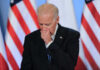
One fall at home kept Senator Mitch McConnell out of sight for weeks, and the quiet ended only when he finally explained why he was in the hospital.
Quick Take
- McConnell said a fall at his Washington home led to his June 14 hospitalization and a stretch of silence about his condition.
- He said doctors found no broken bones, no concussion, no heart attack, no stroke, no tumors, and no hemorrhages.
- His office said he later developed pneumonia, then moved from the hospital to a rehabilitation center.
- The delayed update came after weeks of public speculation, which fit a long-running pattern in political health disclosures.
What McConnell Said Happened
McConnell broke his silence on July 12 with a letter to constituents that put the key fact in plain English: he said he took a fall that sent him to the hospital.
Reporting on the letter said he was admitted on June 14, and that his medical team later reviewed him for a wide range of possible injuries and serious complications.
The statement mattered because it answered the question everyone had been asking for nearly a month. Until then, his office had said only that he was receiving care and recovering. That left a long gap between the hospital admission and the public explanation, which helped fuel the talk around his health.
Mitch McConnell said that his lengthy Senate absence has been because of his recovery from a fall and a subsequent bout with pneumonia, breaking a weekslong silence about his hospitalization that had spurred speculation about his condition. https://t.co/YQ7p622tQA
— The Wall Street Journal (@WSJ) July 13, 2026
What Doctors Ruled Out
The cleanest part of the update was also the most revealing. According to the statement shared by his office, doctors found no fracture, no concussion, no heart attack, no stroke, no tumors, and no hemorrhages.
Reuters and CNN both reported that the update also said the episode began with a fall and that his care moved from the hospital to rehab as he regained strength.
That matters because it narrows the story. This was not a vague “feeling unwell” notice or a carefully worded pause. It was a specific account of an accident, followed by a medical check that ruled out the most feared outcomes.
Why the Delay Drew So Much Attention
McConnell’s delay was not unusual in the broad sense. U.S. law does not force elected officials to reveal major medical problems, and physicians cannot disclose private health information without consent. That means the public often learns about an official’s condition only when the official or staff decides the timing is right.
In a statement posted along with the picture, Mitch McConnell said he was hospitalized due to a fall that left him "briefly unconscious." https://t.co/nOVRhXTXKW
— z1079 (@Z1079) July 14, 2026
This case also landed at a political moment when questions of age and fitness carry extra weight. McConnell is one of the most senior figures in Washington, and reports on his hospitalization quickly became part health story, part power story. That is why the silence mattered almost as much as the fall itself. In politics, delay often creates its own headline.
The Bigger Pattern Behind the Story
McConnell’s situation fits a familiar Washington pattern. Leaders usually disclose health problems on their own terms, after the first shock has passed and after staff can shape the message.
That approach may protect privacy, but it also keeps voters in the dark when the questions are most urgent. The result is a steady tug-of-war between personal dignity and public accountability.
That tension is especially strong when an older officeholder is involved. McConnell’s update did more than explain a hospital stay.
It reopened the broader question of how much the public should have to wait before learning whether a powerful elected official can still fully do the job. His statement closed one mystery, but it left that larger debate very much alive.
Sources:
apnews.com, courier-journal.com, facebook.com, nytimes.com, cnbc.com, instagram.com, ethics.sjmc.wisc.edu, auctoresonline.org, theconversation.com, ash.harvard.edu