Karoline Leavitt is stepping down as White House press secretary at month’s end, and the why matters almost as much as the when.
Story Snapshot
- President Trump said Leavitt will leave by the end of August.
- Leavitt cited family and young children in her public statement.
- No successor was named at the time of the announcement.
- The move fits a common, announcement-first White House pattern.
What Was Announced, By Whom, And When
President Trump announced that Karoline Leavitt will leave her role as White House press secretary by the end of August. The message came through his social post and was quickly echoed by major outlets.
The White House did not name a replacement in the initial wave of reporting. That detail keeps the focus on the timeline and the reason, not a handoff story. The presidency runs on message discipline; a press secretary shift tests it in real time.
Leavitt confirmed the change in her own statement. She framed the decision as a family-first choice. She pointed to the strain of round-the-clock briefings, travel, and crisis response after the birth of her daughter this spring.
Reporters highlighted that she had recently returned from maternity leave. The symmetry between the president’s announcement and her note cut through the rumor mill before it could spin up. That alignment matters in high-velocity news cycles.
Why The Reason Given Resonates With Voters
Most people know what it means to choose family over work when the hours never stop. The press secretary job is a seven-day load under television lights with little margin for error.
A mother who says, I cannot be my best at home doing this pace, speaks a truth many families feel. That is not weakness. That is priorities.
California native emerges as possible replacement for White House press secretary Karoline Leavitt https://t.co/XHcys66jCJ pic.twitter.com/wZsi3JB6kG
— New York Post (@nypost) August 12, 2026
Critics sometimes hunt for a deeper plot in any West Wing exit. That is a sport, not a standard. The facts we have are clear and on the record: the president announced the decision, the press secretary agreed, and the stated reason was her children.
The Stakes For Message Control And The Next Briefing
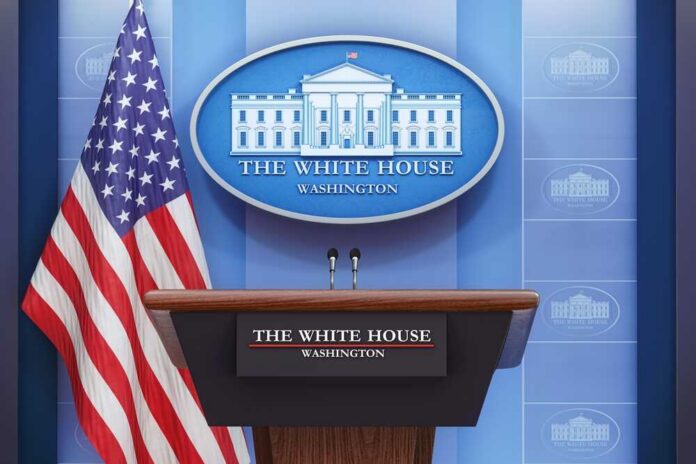
The podium is not just a microphone. It is the fuse box for the White House narrative. Markets, allies, and agencies watch it for signals. A gap without a named successor can invite noise. The smarter read is to watch the briefings the week after she departs.
Does guidance get tighter or looser? Do reporters get shorter answers or longer runway? Those tells will show whether the communications shop planned a clean relay or is running a hurry-up offense.
Past administrations often announce personnel moves first, then file the paper trail later. That rhythm is normal, even if it frustrates those who want documents on day one. The key is whether the follow-through happens on time and as described.
Here, the test will be threefold: a formal effective date, clarity on any advisory role outside the podium, and the naming of a capable successor. If those land, the story ends as it began: direct and verifiable.
How To Read The Tea Leaves Without Overreading Them
Look at outcomes, not whispers. If the transition is smooth, briefing accuracy holds, and policy messages stay aligned, then the choice was personal and the team adapted. If the podium wobbles, leaks spike, or mixed messages appear, then the exit exposed a weak seam.
The simpler explanation still fits today’s facts: a young mother weighed a demanding job and chose her children. Many Americans will nod at that choice because it mirrors their own lives.
Sources:
apnews.com, cnbc.com, youtube.com