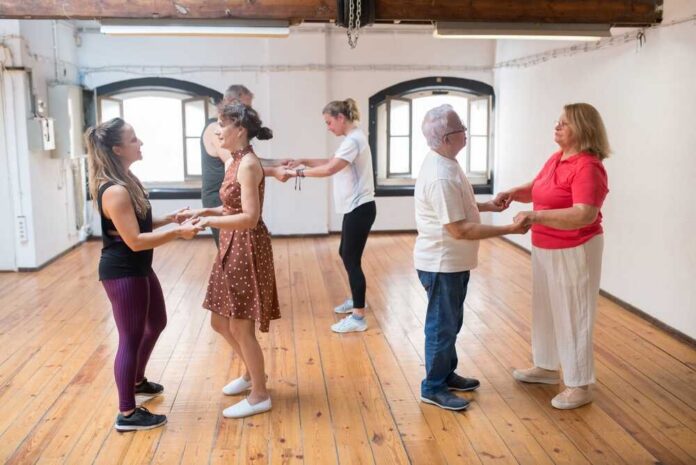
Dancing is one of the few “medicines” for aging that can strengthen your body, train your brain, and lift your mood without feeling like medicine at all.
Story Snapshot
- Regular dancing measurably improves strength, balance, endurance, and gait in older adults.
- Choreography, music, and social contact give the brain a workout that may help preserve thinking and memory.
- Dance delivers many of the same cardiovascular perks as conventional exercise, but in a more enjoyable package.
- The strongest evidence is for functional fitness and quality of life; long-term disease and mortality claims deserve cautious optimism, not hype.
Why doctors quietly love seeing their patients dance
Doctors used to tell older patients to “take it easy.” Today, the smart ones tell them to move, and dancing is climbing the list of preferred options. A comprehensive review of dance programs for older adults found that almost every study reported gains in muscular strength, endurance, balance, and other measures of functional fitness.[2][8]
Another scientific review concluded older adults can significantly improve aerobic power, lower body endurance, strength, flexibility, balance, agility, and gait through dancing.[3] That is not soft, feel-good language; those are measurable changes in how well people move and function.
You should be dancing, yeah. Moving to music offers all kinds of benefits as you age https://t.co/ZS10aiHl5v
— Local 4 WDIV Detroit (@Local4News) May 26, 2026
These are not just lab curiosities. Better balance and gait translate into fewer falls, which are among the most common and costly threats to independence in later life.
Dance-based activities have been associated with reduced fall risk and better mobility, partly because the constant directional changes and weight shifts mimic real-world challenges.[3][4]
Unlike sterile gym routines, dance pairs physical drills with music, rhythm, and often a partner, making people far more likely to stick with it over time. Consistency is where the real payoff hides.
How dance trains heart, muscles, and joints at the same time
Dancing taxes the cardiovascular system much like brisk walking or cycling, raising heart rate and improving circulation, while remaining low-impact enough for older joints when properly scaled.[3][4][6]
Reviews and expert summaries note improvements in cardiovascular health, energy levels, and endurance when seniors adopt dance as regular exercise.[3][5][6]
Movements that involve bending, turning, and reaching also enhance flexibility and joint comfort, with several senior-focused overviews reporting better mobility and less stiffness among habitual dancers.[4][6][7] For people wary of high-intensity workouts, this is an accessible middle lane: meaningful exertion without punishment.
Muscular benefits are equally real. Evidence summarized in medical and senior-care sources shows that dancing improves lower body muscle endurance and strength, especially in the legs and core.[2][3][4][6]
Those improvements matter less for looking “toned” and much more for climbing stairs, rising from chairs, and carrying groceries without help.
Some research also suggests positive effects on bone health because dance is a weight-bearing activity that stresses bones in varied directions, which may help maintain bone mass.[3][6]While dance alone will not replace targeted strength training for everyone, it clearly pushes in the right direction.
Brain, mood, and the surprising mental edge of moving to music
Walk into a senior dance class, and you are watching multitasking in action. Participants listen to music, recall steps, adjust to partners, navigate the floor, and correct missteps in real time.
A systematic literature review highlighted that dance can improve not only strength and balance but cognitive function in older adults.[1]
Other analyses have found that dance and similar mind-body activities improve cognitive performance and may alleviate depression, with some evidence even linking dance to favorable changes in brain-related markers tied to dementia.[1][3]
Medical professionals say that dancing is a great way for older adults to stay healthy as they age because it engages the brain and the body. https://t.co/YfQD0PHfQp
— NBC 7 San Diego (@nbcsandiego) May 26, 2026
Beyond the lab metrics, there is the human side: mood and connection. Senior health resources consistently report that dancing reduces feelings of loneliness and social isolation by bringing people into shared, enjoyable experiences.[1][3][5][6]
Group classes, social dances, and even casual community events create regular appointments to see familiar faces. Movement to music also triggers endorphin release, which helps counteract depression and stress.[4][6][7]
For an aging population where anxiety, isolation, and low mood are common, that combination of movement and community aligns with values of self-reliance, responsibility, and strong social ties.
What the evidence really says—and what it does not
Public-facing articles sometimes race ahead of the data, promising that a little salsa will single-handedly defeat heart disease or dementia. The strongest research, including detailed reviews, supports robust improvements in intermediate outcomes: aerobic capacity, strength, flexibility, balance, agility, gait, and functional fitness.[2][3][8]
Some studies and summaries do report reduced cardiovascular risk and markedly lower dementia incidence among regular dancers compared with other leisure activities, but those findings come with caveats and are less ironclad than the balance and fitness data.[4][7]
The honest reading is this: dancing is not a magic shield against every age-related disease, and it will not replace appropriate medical care, wise eating, or other forms of exercise.
It is, however, a practical, evidence-based way for older adults to move more, think more, laugh more, and stay engaged with others.[1][3][5][6][7]
Because it is enjoyable and socially rewarding, it passes the toughest test in health behavior: people actually do it, and they keep doing it. Aging well might be the most important advantage of all.
Sources:
[1] Web – The Joy of Movement: Unpacking the Benefits of Dancing for Seniors
[2] Web – The Effectiveness of Dance Interventions to Improve Older Adults …
[3] Web – Physical benefits of dancing for healthy older adults: a review
[4] Web – Dancing for Seniors: Benefits and How to Get Started – Healthline
[5] Web – Dance Like You’re Not Aging – Private Physicians Medical Associates
[6] Web – 8 Reasons to Keep on Dancing – All Seniors Care
[7] Web – 10 Benefits of Dance Exercise for Seniors + How to Start
[8] Web – 5 Health Benefits of Dancing – AgingCare.com