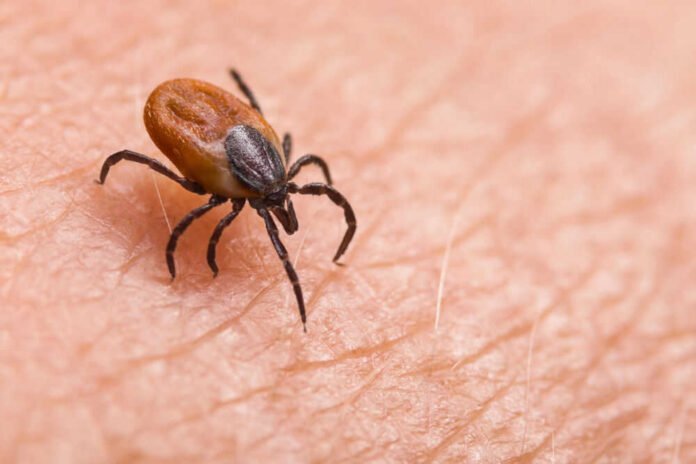
Emergency room visits for tick bites hit their highest level in nearly a decade this spring, and the season’s worst weeks may still be ahead.
Story Snapshot
- In April 2026, tick-related ER visits reached 71 per 100,000 — more than double the seasonal average of 30 per 100,000.
- Every U.S. region except the South Central saw its highest tick-bite ER visit rate since 2017.
- The Northeast was hit hardest, with 163 tick-related ER visits per 100,000 in April alone.
- About 476,000 Americans are treated for Lyme disease every year, and tick season typically peaks in May.
The Numbers Behind the Surge
The Centers for Disease Control and Prevention (CDC) tracks tick-bite ER visits weekly through its Tick Bite Data Tracker. In April 2026, that tracker showed 71 tick-related visits for every 100,000 ER visits nationwide.
The historical average for April sits around 30 per 100,000. That means this spring’s rate was more than double what doctors and public health officials typically see at this point in the year.
The Northeast bore the sharpest spike. Tick-related ER visits in that region jumped from 52 per 100,000 in March to 163 per 100,000 in April.
Connecticut’s Agricultural Experiment Station recorded 1,131 human-biting ticks in April 2026, up from 821 in April 2025. Those are real ticks pulled off real people — not a modeled estimate.
Who Gets Bitten Most Often
Children under 10 and adults aged 70-79 have the highest ER visit rates for tick bites. That pattern holds year after year and makes sense. Young kids play on the ground in tall grass.
Older adults garden, hike, and spend time outdoors in ways that put them in direct contact with tick habitat. Both groups may also be less likely to notice a small tick attached to skin before it has fed for hours.
Tick season is expected to be worse than normal as ER visits rise in much of the U.S. https://t.co/EH7dln8g2E
— CBS News (@CBSNews) July 3, 2026
Males account for the majority of tick-bite ER visits — about 57 percent. The reasons are not fully understood, but men tend to spend more time in wooded and rural settings for work and recreation.
The seasonal pattern is also consistent: visits climb sharply in April, peak in May, then taper through summer before a smaller second spike in October and November.
Why Ticks Are Thriving Right Now
Milder winters are a key driver. Ticks — especially blacklegged ticks, which spread Lyme disease — need prolonged hard freezes to die off in large numbers.
When winters stay warm, more ticks survive, emerge earlier in spring, and stay active longer into fall. That extended window means more chances for people to get bitten before they realize tick season has even started.
Goudarz Molaei, who runs the Tick and Borne Surveillance Program at Connecticut’s Agricultural Experiment Station, offered a note of caution.
He suggested that blacklegged ticks may have had a delayed emergence following a cold winter, which could explain the sharp April spike rather than a steady climb throughout the season. That matters because it means the final picture for 2026 is still forming. The CDC itself labels the current data as preliminary.
Lyme Disease Is the Real Stakes
Most people who go to the ER for a tick bite do not have Lyme disease — yet. But approximately 476,000 Americans receive treatment for Lyme disease every year, according to CDC estimates.
That makes it the most common tick-borne illness in the country by a wide margin. Lyme disease is caused by a bacterial infection. It is treatable with antibiotics, but early detection matters enormously. A tick attached for less than 24 hours is far less likely to transmit disease than one that has fed for two or three days.
What to Do If a Tick Bites You
Remove the tick right away using fine-tipped tweezers. Grab it as close to the skin as possible and pull straight up with steady pressure. Do not twist or jerk.
After removal, clean the area with rubbing alcohol. Experts also suggest saving the tick in a small sealed bag or jar with rubbing alcohol so a doctor can examine it later. Watch the bite site for a bull’s-eye rash, which is a key early sign of Lyme disease, and seek care if it appears.
Before heading outdoors, wear light-colored clothing so ticks are easier to spot. Tuck pants into socks in wooded areas. Use an insect repellent with DEET on exposed skin.
When you come inside, check your entire body — including the scalp, the areas behind the ears, and the areas behind the knees. These simple steps cost nothing and can prevent a serious illness that costs far more to treat the longer it goes undetected.
Sources:
cbsnews.com, tickmitt.com, cdc.gov, abcnews.com, unmc.edu