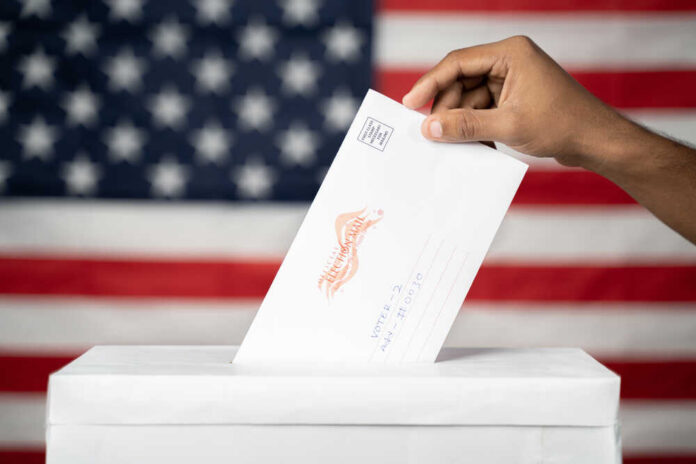
The Supreme Court now holds the clock in its hands as ballots start moving and the rules to handle them hang in limbo.
Story Snapshot
- The Justice Department asked the Supreme Court for emergency relief to enforce new mail-ballot rules before more states mail ballots.
- The administration says uniform federal direction is needed now to avoid confusion and ensure compliance.
- The Court already granted preliminary relief once but did not decide the legality of the policy.
- Opponents say the order tramples state authority and risks disenfranchising voters, and a judge questioned readiness.
What the administration is asking the Supreme Court to do right now
The administration filed an emergency request urging the Supreme Court to let nationwide mail-ballot restrictions take effect while litigation continues. The Justice Department says ballots are already in production and some are being mailed.
It argues that delay breeds chaos as states follow different rules across court lines. The request asks the Court to pause lower-court blocks so the government can implement one uniform standard for the Postal Service and election mail handling before more deadlines hit.
BREAKING: The Trump administration makes another appeal to the Supreme Court to allow mail ballot restrictions. https://t.co/j7mizn0PWs
— The Associated Press (@AP) September 6, 2026
Solicitor General John Sauer told the Court that ballots have begun to go out in North Carolina, with Alabama and several more states next on the calendar.
He framed the issue as an urgent compliance problem: agencies and vendors need a clear green light to start, not a patchwork of injunctions that suggest the rules are optional.
The filing says an administrative stay would remove uncertainty and signal that compliance must begin without delay to protect orderly elections.
What the order would change about mail ballots
Reports describe a policy that directs the Postal Service to process ballots using a federal list of eligible voters and specified ballot-envelope standards.
The idea is to send and deliver ballots only to confirmed eligible voters and to standardize how envelopes are scanned, tracked, and handled.
The administration ties this to the president’s authority over the executive branch and the Postal Service, saying federal oversight is proper where federal agencies touch election mail, even while states run elections.
When federal agencies handle sensitive election mail, uniform rules can support chain of custody and deter mistakes.
If the government can show the systems are ready and accurate, then common sense says clear standards should not scare anyone who believes in fair counts and clean records. The key is proof, not posture.
The legal footing and the clock the Court cannot ignore
The Supreme Court already granted the administration a preliminary win, lifting at least one block and allowing some planning to move forward, while stressing it was not ruling on the merits. That matters.
It shows at least some justices see the timing risks and the need to avoid late-stage confusion. But a green light for planning is not a final blessing. The heart of the fight—who controls what and how—still waits for a full legal answer.
Opponents describe a different risk. They say the executive branch cannot write election rules, that the Postal Service cannot refuse delivery of lawful ballots, and that sudden federal demands would confuse voters and burden states.
A federal judge expressed concern that the record lacked detailed, sworn evidence from the Postal Service explaining how the new systems would work in real time. That gap invites stricter scrutiny when the stakes are this high.
Where the facts and the arguments actually meet
Three hard truths define the path ahead. First, ballots are moving. The calendar is not a talking point; it is a hard deadline. Second, the Supreme Court prefers not to change election procedures close to an election without strong reasons.
Third, neither side has a final victory yet. The administration argues that one uniform federal standard prevents confusion; challengers argue that a new federal standard this late would cause it.
Trump administration petitions Supreme Court to allow mail ballot restrictions | https://t.co/4YCwQtyBIB https://t.co/hdyLoMJcPy
— Woody (@dw2025rmeat) September 6, 2026
Here is the practical test that should decide this fight: can the Postal Service and related systems run these rules with near-zero error right now, and will they prevent concrete problems without blocking lawful votes?
If the administration can deliver sworn technical evidence and show proven readiness, then a temporary stay to allow consistent federal handling may align with order and fairness. If not, caution should prevail. Elections need clarity more than novelty when the mail is already moving.
Sources:
aclum.org, politico.com, aclu.org, reuters.com, apnews.com